

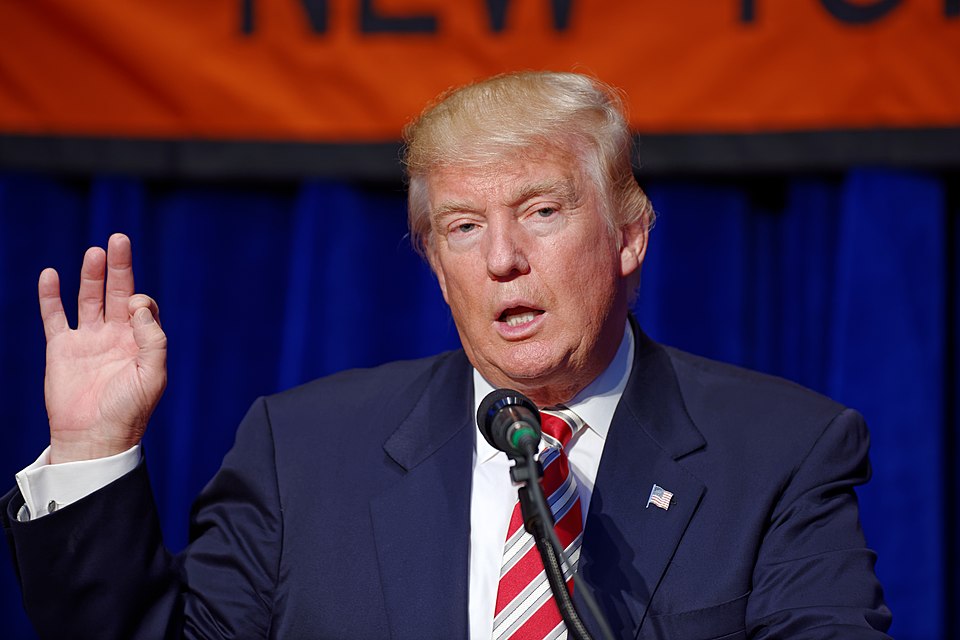
US and Pakistan strike trade deal that aims to boost energy cooperation and improve trade relations. President Donald Trump has declared that the United States has come to an agreement with Pakistan to explore and expand the oil reserves in the South Asian country together. Pakistan agreed to the deal and said it would lead to lower US tariffs on Pakistani exports.
Trump announced this late on Wednesday on his Truth Social platform. He stated that the two countries will collaborate in the development of the massive oil reserves in Pakistan. He also said that the procedure of choosing an oil company to head the partnership is in progress.
Deputy Prime Minister and Foreign Minister of Pakistan, Ishaq Dar, also confirmed the deal in a short statement on X (formerly Twitter), saying, “Pakistan concludes deal with USA,” without providing additional information.
Joint Oil Development and Tariff Relief
It is not clear what the agreement entailed. In his first post, Trump did not refer to the reduction of tariffs. But the Pakistani authorities are adamant that the deal involves a lower tariff on its exports to the United States. The kind and pace of these tariff reductions are yet to be revealed.
This is a trade breakthrough after months of negotiations. In April, the US threatened to levy a 29 percent tariff on Pakistani exports. Nevertheless, Washington postponed the proposed tariff increase by 90 days to give room to trade negotiations. This new agreement was made possible by the suspension.
The development was confirmed by Pakistan Finance Minister, Mohammad Aurangzeb. He disclosed that he had a number of meetings with senior US officials in Washington. Aurangzeb termed the deal as a win-win situation to the two countries. According to him, the negotiations were not only about trade. In his opinion, long-term economic cooperation should be accompanied by investment and trade.
Aurangzeb made his comments in a video released by the finance ministry of Pakistan. He stressed that this agreement is a sign of greater strategic interaction between the two countries.
Sharp Criticism of India by Trump
Interestingly, the announcement is made a day after the US imposed a 25 percent tariff on India, the regional competitor of Pakistan. The US was justifying the tariff because India had been trading with Russia even after the war in Ukraine was still going on.
In his Wednesday social media post, Trump harshly criticized India. He said that the Russian and the Indian economies were dead. He said that India has one of the highest tariffs in the world and the US has not done much business with them because of these high barriers.
Trump said, I do not mind what India does with Russia. They can go down together with their dead economies, as far as I am concerned.” His remarks indicate a toughening of attitude towards New Delhi, in sharp contrast to the new cordiality extended to Islamabad.
Future Potential Oil Sales to India
Trump alluded to a potential energy transition in the region when he announced the US-Pakistan oil alliance. He proposed that Pakistan might be an oil exporter in the future, even to India. He wrote, who knows, they will be selling oil to India one day!
This unspoken message can be seen as a long-term US strategic interest in the region- not only to benefit Pakistan but also to gain leverage in South Asian geopolitics.
Outlook on the Deal
Both sides have so far not provided any technical information, including the size of the oil reserves in question or the name of the prospective US oil company that will spearhead the exploration. Trump merely stated that negotiations are underway to find the right corporate partner.
Both nations are pitching the deal as a multi-pronged agreement that can be used to achieve economic, strategic, and diplomatic objectives. The Trump administration seems to be rebalancing alliances in South Asia through trade and energy relationships, and Pakistan is hoping to find investment and tariff relief.
With the global energy market changing and regional alliances shifting, this deal can be a turning point in the US-Pakistan relations. Should it succeed, it would rejuvenate the Pakistani economy by developing energy and guarantee US trade and investment in South Asia.
