

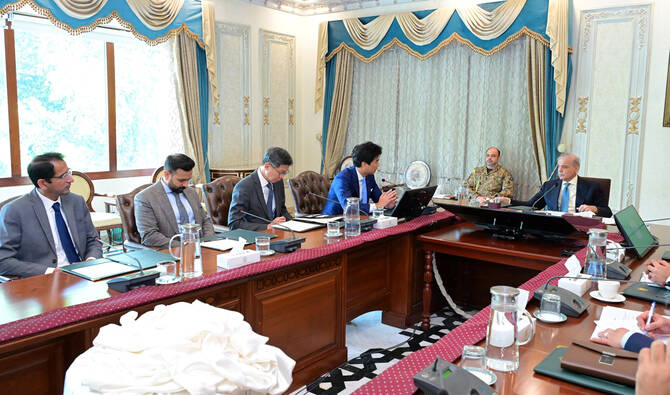
ISLAMABAD — Pakistan Army Diplomacy Pakistan’s Chief of Army Staff (COAS), Field Marshal Syed Asim Munir, declared his recent international visits a “successful diplomatic maneuver,” signaling a pivotal moment in Pakistan’s evolving foreign policy. The announcement came during a high-level military meeting, the 271st Corps Commanders’ Conference, at the General Headquarters (GHQ) in Rawalpindi on July 10, 2025. This marked one of the rare occasions where the country’s military leadership made a direct public statement on Pakistan’s foreign diplomatic engagements.
According to the Inter-Services Public Relations (ISPR), Munir provided an in-depth briefing to top military commanders, reflecting on his official visits to the United States, the Gulf nations, and Central Asia. His diplomatic tour, which took place in May and June 2025, paralleled efforts by Prime Minister Shehbaz Sharif, who also visited key regional partners including Saudi Arabia, UAE, Turkiye, Iran, and Azerbaijan.
Diplomatic Engagement in the Wake of Regional Tensions
These engagements followed heightened tensions with India earlier in May and growing instability in the Middle East. Pakistan’s decision to launch a proactive foreign policy initiative reflected the need to enhance diplomatic ties and promote national security amid rapidly shifting geopolitical landscapes.
A highlight of the army chief’s international tour was an unprecedented two-hour private lunch hosted by US President Donald Trump at the White House. Notably, no Pakistani civilian leaders were present during this meeting, making it an exceptional occurrence in diplomatic norms. The high-level discussion included critical regional and international topics such as:
- Ongoing India-Pakistan tensions
- Growing Iran-Israel conflict
- Economic cooperation, including trade and investment
- Cryptocurrency regulations and digital economy growth
- Critical minerals exploration
- Information technology and innovation partnerships
A Strategic Military–Civilian Alliance Abroad
The ISPR confirmed that Munir accompanied Prime Minister Sharif on several diplomatic missions to Iran, Turkiye, Azerbaijan, Saudi Arabia, and the UAE, stressing a unified approach between military and civilian leadership. This collaborative diplomatic thrust underscores Pakistan’s intention to align its strategic defense vision with broader foreign policy objectives.
In its official statement, ISPR emphasized that the army chief shared “Pakistan’s objective perspective” on various bilateral, regional, and extra-regional developments. These face-to-face dialogues with top-tier leadership, particularly in Washington, served as an opportunity to dispel misconceptions and reinforce mutual cooperation.

A Rare Public Military Diplomacy Disclosure
Military analysts noted that it’s unusual for Pakistan’s armed forces to publicly comment on foreign visits. Munir’s openness signals the military’s growing role in shaping international discourse and aligns with the emerging “hybrid governance model” where power is increasingly shared between the country’s civilian and military institutions.
During the Corps Commanders’ Conference, the leadership conducted a “holistic review” of national and international security concerns. The primary focus centered on:
- Middle East developments
- Iran’s evolving strategic position
- Threats posed by Indian intelligence agencies
Call for Self-Reliance and National Resolve
The forum acknowledged the global rise in militarized foreign policy strategies, with states increasingly resorting to force over diplomacy. Pakistan’s military leaders urged a renewed focus on:
- Self-reliant defense capabilities
- Internal unity and cohesion
- Sustainable strategic autonomy
According to ISPR, the need to persistently develop national capabilities remains paramount. This includes military modernization, cybersecurity readiness, and bolstering conventional defense systems to deter regional threats.
India–Pakistan Friction: Renewed Accusations
During the forum, Pakistan’s military once again accused India’s intelligence apparatus of sponsoring terrorist proxies. The army alleged that New Delhi actively supports groups responsible for attacks in Khyber Pakhtunkhwa and Balochistan.
“Forum strongly asserted that it is imperative to take decisive and holistic actions at all levels against the Indian-backed and sponsored proxies,” ISPR said. These renewed accusations may further strain bilateral relations, already volatile following incidents earlier in the year.

Civil–Military Balance: A Hybrid Governance Era
Pakistan’s governance model has undergone significant shifts in recent years. While civilian governments lead on paper, the military continues to exert substantial influence over key areas including:
- Foreign affairs
- Security policy
- Economic planning in defense sectors
Public officials and analysts increasingly refer to this dynamic as a “hybrid system”, where military and civilian authorities share governance responsibilities. Munir’s increasing diplomatic visibility reflects this evolution, highlighting how defense diplomacy now plays a front-line role in international negotiations.
Conclusion: A Military Diplomacy Milestone
Field Marshal Munir’s public acknowledgment of his diplomatic role reveals the military’s evolving strategy to influence international narratives and reinforce bilateral ties. His visits to high-stakes regions and key global capitals such as Washington, Riyadh, Tehran, and Ankara signal Pakistan’s intention to position itself as a relevant player in the global order.
These proactive moves are aimed at securing economic opportunities, defending national interests, and responding to fast-changing security challenges. Whether this military-led diplomacy model becomes a long-term strategy remains to be seen. However, the current momentum clearly reflects Pakistan’s intent to elevate its diplomatic game in a more assertive and coordinated manner.
In an age where hard power increasingly intersects with diplomacy, Pakistan’s army is making it clear: it’s not just watching global events unfold it’s shaping them.
Read Mire Latest News
