

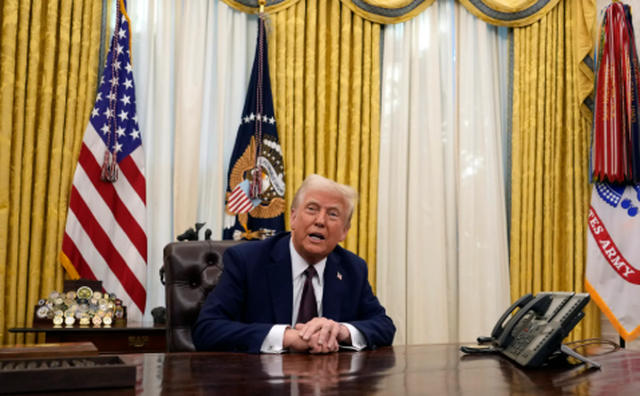
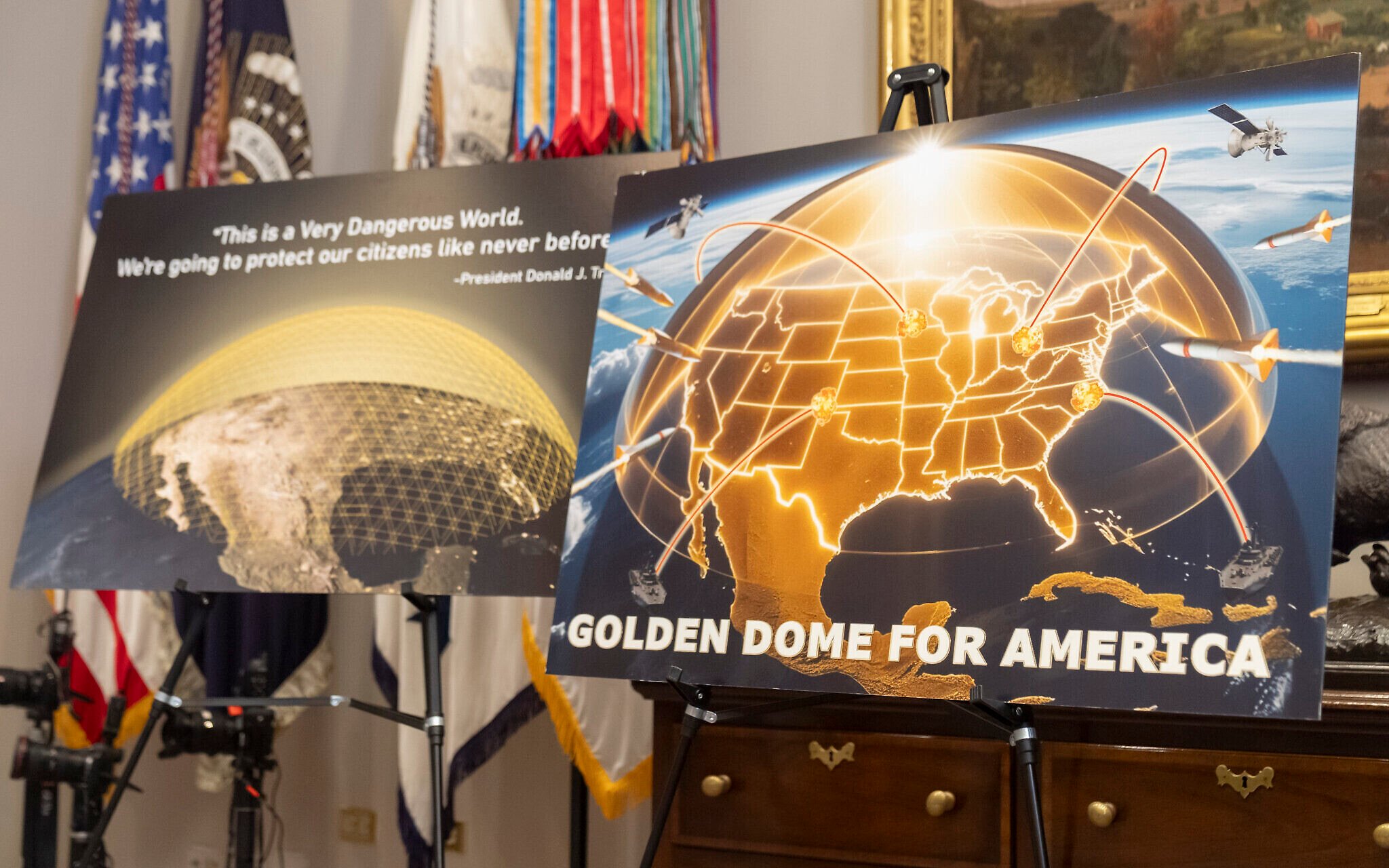
WASHINGTON, D.C. — Former U.S. President Donald Trump on Tuesday revealed the blueprint for a groundbreaking $175 billion missile defense system, dubbed the “Golden Dome”, designed to defend the U.S. against potential threats from China and Russia.
Speaking from the White House, Trump confirmed that U.S. Space Force General Michael Guetlein will oversee the ambitious project, which will involve deploying hundreds of satellites to detect, monitor, and potentially neutralize missile launches from adversaries.
“This is essential to protect our homeland,” Trump stated. He further disclosed that Canada has shown interest in participating in the initiative.
Canada Considering Partnership
In response, the office of Canadian Prime Minister Mark Carney acknowledged ongoing discussions with Washington. Talks reportedly focus on enhancing NORAD and exploring involvement in “related initiatives such as the Golden Dome.”
Operational Target by 2029
Trump expressed hope that the Golden Dome system would become operational by January 2029, coinciding with the conclusion of his term. However, many analysts remain skeptical about the timeline’s feasibility and the actual long-term cost.
“This is what Reagan envisioned with ‘Star Wars’,” Trump said, referencing the Strategic Defense Initiative from the 1980s. “Now we have the technology to make it real.”
Political and Financial Roadblocks
While Republican lawmakers have largely rallied behind the proposal, the plan faces intense political debate and budgetary uncertainty. The Congressional Budget Office (CBO) estimates that the total cost of the system could surpass $831 billion over 20 years.
Some Democrats have voiced concerns about a lack of transparency in the contractor selection process. Private firms such as SpaceX, Palantir, and Anduril are being considered as key players in the program.
“This isn’t just about traditional defense anymore,” noted Senator Kevin Cramer. “It’s a modern ecosystem led by software, sensors, and private-sector innovation.”
Defense contractors like L3Harris Technologies, Lockheed Martin, and RTX Corp have also been named as potential contributors. Notably, L3Harris has already invested $150 million in a satellite production facility in Indiana, which could play a critical role in the Golden Dome initiative.
A Scaled-Up Iron Dome in Space
Inspired by Israel’s Iron Dome, Trump’s Golden Dome aims to operate on a much larger scale—space-based and equipped with high-tech satellite arrays to intercept threats at an early stage.
Initial development will draw on existing Pentagon programs, and the economic benefits could favor early deployment sites such as Alaska, Florida, Georgia, and Indiana.
Funding Tied to Larger Defense Bill
The fate of the project hinges on a proposed $25 billion initial funding, bundled into a larger $150 billion defense package. However, the funding is currently linked to a reconciliation bill facing strong political resistance.
“If the reconciliation bill fails, funding for Golden Dome could collapse,” warned an unnamed industry insider. “That would jeopardize the entire schedule.”
