

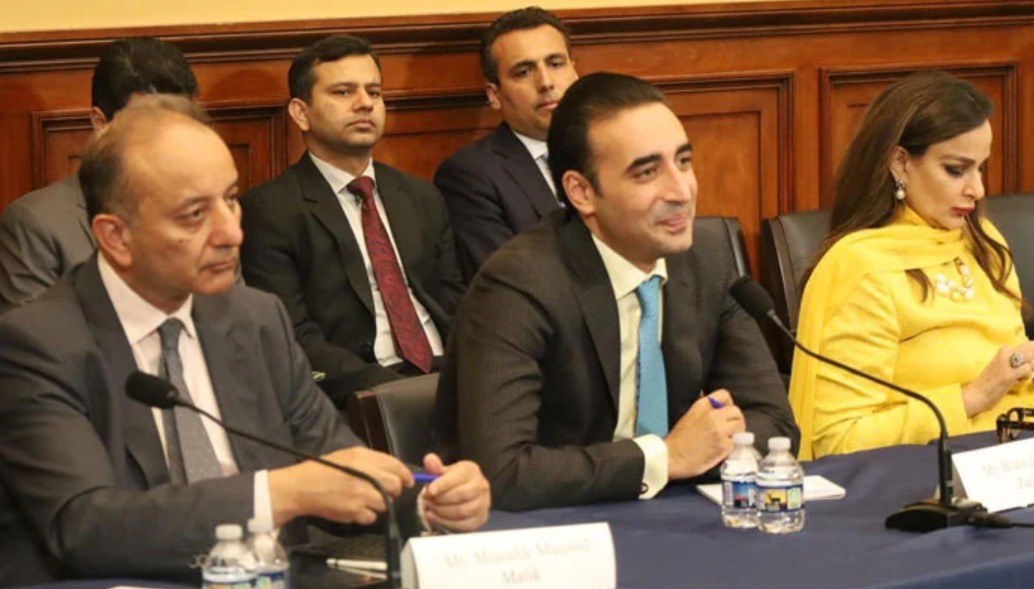
Former Foreign Minister and Chairman of the Pakistan Peoples Party (PPP), Bilawal Bhutto-Zardari, delivered a compelling address to the US House of Representatives Foreign Affairs Committee. Highlighting the escalating tensions in South Asia, he emphasized the urgent need for the South Asia Peace Dialogue to address India’s increasingly aggressive policies, which threaten regional stability.
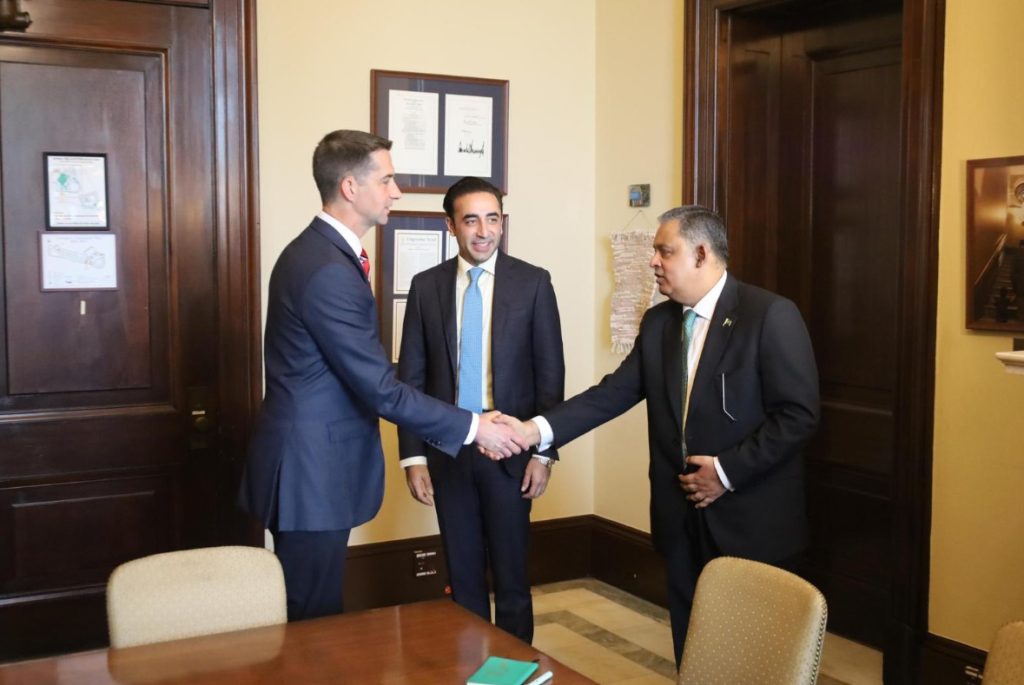
Promoting Dialogue for Regional Stability
Bilawal urged American lawmakers to support Pakistan’s “mission of peace” by fostering dialogue to prevent conflict in the region. Leading a high-level diplomatic delegation, he engaged in discussions about regional dynamics, the Kashmir conflict, and the broader state of US-Pakistan relations. This outreach demonstrates Pakistan’s commitment to resolving critical issues through diplomacy.
The Delegation’s Mission
Bilawal was accompanied by officials such as Hina Rabbani Khar, Sherry Rehman, Dr. Musadik Malik, Khurram Dastgir Khan, Jalil Abbas Jilani, Tehmina Janjua, Bushra Anjum Butt, and Syed Faisal Subzwari. Together, they voiced Pakistan’s concerns over New Delhi’s provocations and stressed the need for renewed cooperation in South Asian geopolitics. These discussions are part of Pakistan’s broader diplomatic efforts following recent military confrontations with India.
environment The Pahalgam Incident and Operation Bunyan- um- Marsoos
Tensions peaked last month after the Pahalgam incident in Indian Illegally Occupied Jammu and Kashmir (IIOJK), where 26 tourists lost their lives. In response, India launched airstrikes inside Pakistan, prompting Islamabad’s measured retaliatory operation, Bunyan-um-Marsoos. After 87 hours of cross-border attacks, a US-brokered ceasefire brought temporary relief on May 10.
Bilawal acknowledged the US’s role in de-escalating the conflict but emphasized that the ceasefire was just the beginning. He highlighted the region’s heightened insecurity and called for continued efforts to establish lasting peace.
India’s suspense of the Indus Waters Treaty
A significant concern raised by Bilawal was India’s suspension of the Indus Waters Treaty. He described it as a “violation of international law.” Weaponizing water resources against Pakistan’s 240 million citizens, he warned, poses an existential threat. “If India pursues this course of action, it would be tantamount to a declaration of war,” he stated.
A Call for US Support in Peace sweats
Bilawal expressed gratitude for the US’s role in brokering peace but stressed the need for sustained American involvement. He urged lawmakers to facilitate meaningful dialogue between Pakistan and India, emphasizing that resolving the Kashmir issue benefits global stability.
“South Asia stands at a dangerous crossroads,” he noted. “The threshold for full-scale war between Pakistan and India has never been so low.” He warned against treating any incident in India, proven or otherwise, as grounds for war. This volatile situation demands urgent diplomatic intervention.
Sherry Rehman Highlights the pitfalls of Miscalculation
Senator Sherry Rehman, a crucial member of the delegation, echoed Bilawal’s enterprises. Speaking at a press conference, she appertained to the recent 87- hour conflict as a exercise of the disastrous eventuality of misconstructions between nuclear-fortified neighbors.
” A nuclear conflict in South Asia would be willful and disastrous,” she advised. Rehman also blamed India’s media for fostering a war narrative while playing down peace sweats. She underlined the legitimacy and restraint of Pakistan’s military response to Indian aggression, emphasizing the need for principled accommodations.
The Need for Multilateral Mediation
Rehman lamented India’s harmonious turndown to engage in bilateral or multinational accommodations. She called for a serious and multinational frame to resolve the Kashmir issue, stressing that unilateral approaches by New Delhi are inadequate and ineffective.
” A result to the Kashmir conflict requires India to accept third- party agreement, as meaningful dialogue is essential for progress,” she stated. Without similar sweats, Rehman advised, the recent conflict could escalate into a global tragedy.
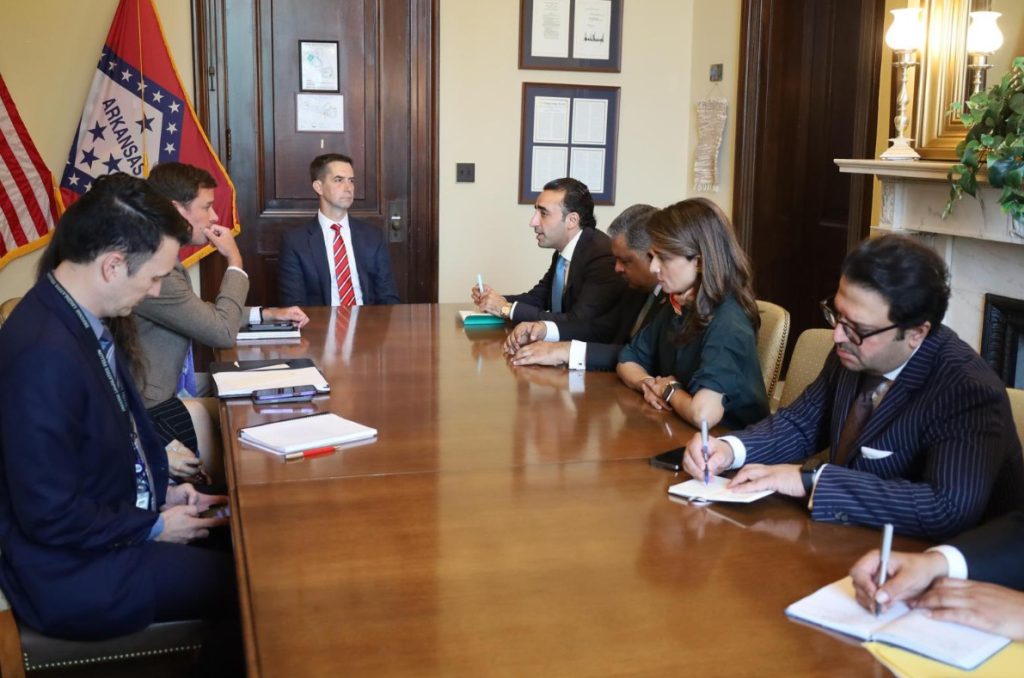
Gratitude and a Vision for Peace
Pakistan’s Ambassador to the US, Rizwan Saeed Sheikh, concluded the delegation’s Capitol Hill meetings by thanking American lawgivers for their formative engagement. He reiterated Pakistan’s commitment to peace and tactfulness, prompting the US to work its influence in fostering dialogue between the two nations.
Conclusion erecting a Future of Stability
Bilawal Bhutto- Zardari’s appeal to US lawgivers underscores Pakistan’s fidelity to indigenous stability and peaceful concurrence. By addressing critical issues like India’s aggressive station, the Kashmir conflict, and the suspense of the Indus Waters Treaty, Pakistan’s politic outreach highlights the urgency of transnational involvement in South Asia. With the US’s continued support, there’s stopgap for meaningful dialogue and a future free from the shadow of conflict.
