

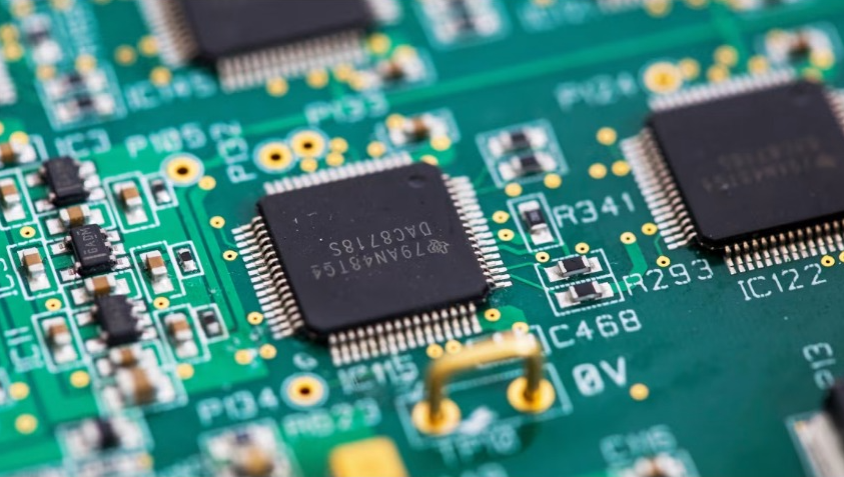
Texas Instruments (TI) has announced a groundbreaking $60 billion investment to expand semiconductor manufacturing across the United States. The initiative, revealed on Wednesday, aligns with efforts by President Donald Trump’s administration to encourage domestic production by technology giants like Apple and Samsung. This ambitious plan marks a significant step in strengthening the U.S. semiconductor industry and creating thousands of jobs.

Massive Expansion Across Texas and Utah
The investment will fund the development of seven semiconductor fabrication plants across Texas and Utah. TI’s expansion is expected to create over 60,000 jobs, reflecting the company’s commitment to bolstering U.S.-based manufacturing. In a press release, TI emphasized its partnership with the Trump administration to produce critical chips domestically. These semiconductors power a wide range of technologies, including smartphones, data centers, and vehicles.
Largest Investment in U.S. Semiconductor Manufacturing
TI has described this initiative as the “largest investment in foundational semiconductor manufacturing in U.S. history.” The company partners with prominent tech and automotive players like Apple, Nvidia, and Ford, underscoring the broad impact of its operations.
“President Trump has prioritized increasing semiconductor manufacturing in America,” said Commerce Secretary Howard Lutnick in the announcement. “This partnership with TI will ensure robust U.S. chip production for decades, reinforcing our nation’s technological leadership.”
Strengthening U.S. Manufacturing
The announcement is part of a larger movement spearheaded by the Trump administration to promote American manufacturing. This year alone, several major companies have pledged significant investments:
- General Motors: $4 billion to boost U.S. production.
- Apple: $500 billion to expand U.S. facilities.
- Stargate Initiative: A collaboration between Oracle, OpenAI, and SoftBank to enhance AI infrastructure in the U.S.
These developments align with Trump’s goal of revitalizing U.S. manufacturing, a key focus of his presidency. By imposing tariffs and incentivizing domestic production, the administration aims to create jobs and address trade imbalances.
Challenges in Domestic Manufacturing
While the push for onshore production gains momentum, challenges remain. Experts caution that manufacturing complex products like smartphones domestically is not without hurdles. The U.S. currently lacks the skilled labor force and component supply chain required for large-scale production of devices like iPhones.
Despite these obstacles, companies are making strides in advancing domestic capabilities. Trump Mobile, a new venture by the Trump Organization, plans to launch a U.S.-designed and built smartphone in September. However, industry analysts note that scaling such efforts nationwide will require significant investment in workforce development and infrastructure.
Competing with China in Technology
The Trump administration’s focus extends beyond manufacturing, targeting technological dominance over global competitors like China. Chinese startup DeepSeek recently disrupted markets with a high-performing, cost-effective AI model, heightening concerns in Silicon Valley and Wall Street.
Vice President JD Vance addressed these challenges at the Artificial Intelligence Action Summit in Paris earlier this year. “The United States leads in AI innovation,” he declared. “This administration is committed to maintaining that edge.”
A Collaborative Vision for the Future
TI’s $60 billion investment symbolizes a collaborative effort between private enterprise and government to secure America’s position as a global technology leader. By increasing domestic production of essential semiconductors, the U.S. can reduce reliance on foreign supply chains and strengthen its economic resilience.
As the tech industry evolves, initiatives like TI’s expansion pave the way for sustainable growth and innovation. The ripple effects of these investments will likely influence job creation, technological advancements, and economic stability for years to come.
