

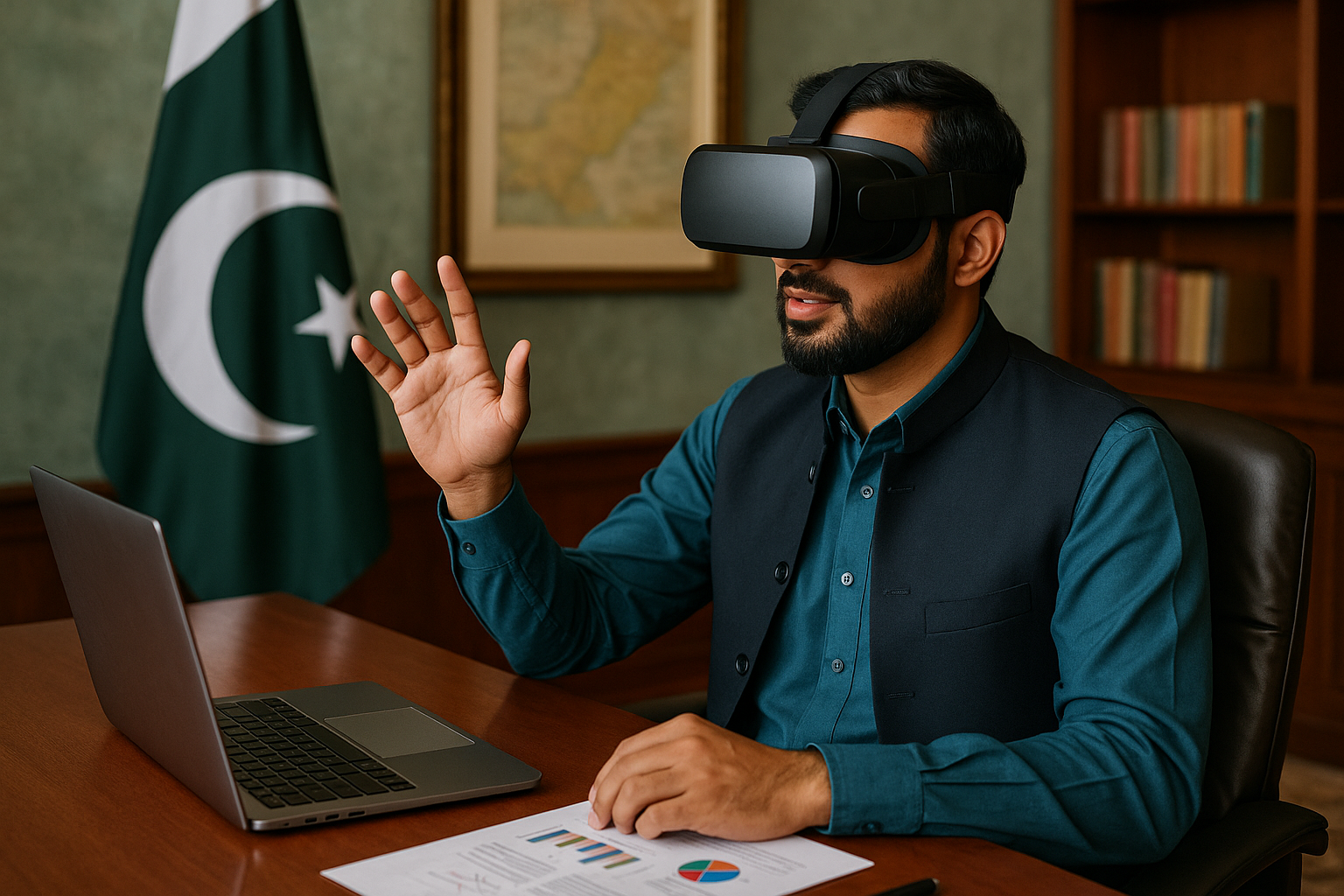
Virtual Reality (VR) is now being used in many areas outside of gaming and entertainment, thanks to the fast pace of digital change. This technology is changing the way industries function by providing exciting, interactive experiences that encourage new ideas. In Pakistan and similar developing countries, VR can help the public sector modernise services, save money and work more efficiently.
Using Virtual Reality to Improve Emergency Services
Training for emergencies in Pakistan is often hampered by high costs, worries about safety, and difficulties with logistics. VR technology provides a safe and affordable way to train people. VR allows police, firefighters, and medical teams to practice handling emergencies such as fires, floods, or active shooter situations in a safe and convenient way.
EuphoriaXR and similar companies are already helping public sector organisations train their staff in firefighting, medical response, and law enforcement using VR. VR helps first responders practice in stressful situations, which improves their ability to make decisions, notice details and cooperate. The International Research Journal of Modernisation in Engineering Technology and Science reports that VR training helps people react more quickly and make better decisions in emergency situations.

Using VR to Improve Mental and Physical Healthcare
Virtual Reality is being used more in healthcare and mental health services. With VR exposure therapy, those with anxiety, PTSD or phobias can experience their triggers in a safe and controlled setting. Using VR games in physical therapy encourages patients and speeds up their recovery.
Telemedicine programmes in Pakistan can use VR to help people in remote areas who do not have many qualified doctors nearby. Augmented Reality (AR) allows patients to take part in guided therapy sessions and receive help from specialists in cities during remote surgeries.
Using Immersive Learning Tools to Improve Education
VR can help Pakistan’s education sector by solving problems related to insufficient infrastructure and access to good teaching tools. Learning in VR classrooms and digital labs can make the process more fun and easier for everyone. In the classroom, students can visit Mohenjo-Daro or Lahore Fort online, learn about cells, or practice engineering, all without leaving the classroom.
According to Mystakidis et al. (2021), VR helps students with learning disabilities by engaging their minds, behaviours and emotions. This new way of teaching allows all students to participate and better understand difficult topics.
Overcoming Challenges in VR Implementation
Although Virtual Reality has great potential, there are obstacles to using it in Pakistan’s public services. The main issues are the high price of hardware, concerns about data privacy, and risks from cyberattacks. Because VR systems gather sensitive biometric and behavioural information, many people are concerned about their privacy.
Also, the way VR fully engages users can sometimes result in people becoming too dependent on technology. To address these risks, Pakistan should have strong regulations, ethical rules, and good cooperation between the government and the private sector.
The Role of VR in the Future of Public Services in Pakistan
Virtual Reality is more than a trend; it is truly changing the world. If the government invests wisely, supports VR, and regulates it properly, VR can revolutionise how public services are delivered in Pakistan. VR can help with emergency response, telehealth, and online education, which can benefit communities, close gaps in access, and improve the public sector.
