


President Donald Trump’s strikes on Iranian nuclear facilities have sparked bipartisan debate, intensifying discussions about war powers, constitutional authority, and U.S. foreign policy. The controversial action placed his decisions under scrutiny from Congress, highlighting a stark partisan divide.
Republicans Back Trump’s Actions
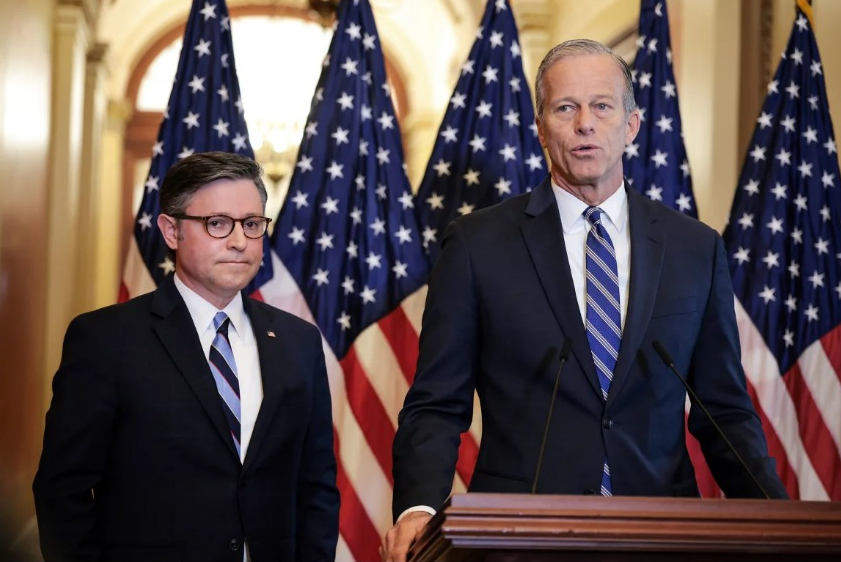
House Speaker Mike Johnson and Senate Majority Leader John Thune were both notified ahead of the strikes, allowing them to publicly support the president’s decision almost immediately. Johnson defended Trump’s unilateral action, emphasizing the urgency of the situation. “Leaders in Congress understood the imminent danger,” Johnson wrote on X, adding that the strikes were “necessary, limited, and targeted.”
Dozens of Republican lawmakers quickly echoed this sentiment. The majority hailed Trump’s decision as a decisive move against Iran’s nuclear ambitions.
However, a few Republicans expressed skepticism. Kentucky Representative Thomas Massie, known for his staunch constitutionalism, plans to force a full House vote next week on limiting Trump’s war powers. Rep. Warren Davidson and Rep. Marjorie Taylor Greene also raised questions about the constitutionality and strategic wisdom of the strikes.
Democratic Leaders Condemn the Strikes
In contrast, Democratic leaders were vocal in their opposition. Senate Minority Leader Chuck Schumer, House Minority Leader Hakeem Jeffries, and other prominent Democrats criticized the administration for bypassing Congress.
“The American people deserve more than vague rhetoric and unilateral decisions,” said Senator Mark Warner, the leading Democrat on the Senate Intelligence Committee. He demanded clear strategic objectives and a justification for the strikes. Warner’s colleague, Senator Tim Kaine, reiterated his commitment to forcing a Senate vote to assert Congress’ constitutional role in authorizing military action.
Jeffries warned of potential retaliation against U.S. troops in the region, accusing Trump of failing to deliver on his promise of Middle East peace. Independent Senator Bernie Sanders labeled the strikes “grossly unconstitutional,” calling for accountability and transparency from the White House.
Partisan Divide Over Consultation
The administration’s decision to notify only select congressional leaders further inflamed tensions. Typically, the bipartisan “Gang of Eight”—comprising top leaders and intelligence committee heads—would be briefed before significant military actions. In this case, Democrats, including Sen. Warner and Rep. Jim Himes, learned about the strikes after they had occurred.
A White House official described the pre-strike notifications as “courtesy heads-ups,” but did not explain the partisan disparity. This decision has fueled criticism from Democrats, with Rep. Sean Casten calling the strikes an “impeachable offense.”
Trump’s Strikes and the War Powers Debate
The strikes have reignited a long-standing debate over presidential war powers. Democrats and some Republicans argue that Congress must assert its constitutional authority to prevent the executive branch from overstepping its bounds.
Senator Kaine’s resolution, introduced before the strikes, aims to require congressional approval for any military action against Iran. “We cannot afford a third unnecessary war in the Middle East,” Kaine said, emphasizing the need for deliberation and public accountability.
In the House, Massie’s push for a war powers vote highlights growing bipartisan concern about unchecked executive authority. “This is not Constitutional,” Massie declared, reinforcing the necessity of congressional oversight.
Supporters Praise Trump’s Strategy
Despite the backlash, Trump’s actions received praise from some lawmakers. Senator John Fetterman, a Pennsylvania Democrat, broke ranks with his party to endorse the strikes. “Iran is the world’s leading sponsor of terrorism and cannot have nuclear capabilities,” he wrote on X, saluting the military’s efforts.
Fetterman’s support mirrors the views of many Republicans, who argue that the strikes were a proportional response to Iran’s nuclear threat. They believe Trump acted within his authority as Commander-in-Chief to address an urgent security issue.

Implications for U.S. Troops and Regional Stability
Critics of the strikes warn that Trump’s actions could escalate tensions in the Middle East. Jeffries and Sanders highlighted the increased risk to U.S. troops stationed in the region. They called for immediate classified briefings to assess the potential fallout and ensure strategic clarity.
Meanwhile, some Republicans, like Rep. Greene, cautioned against further entanglement in foreign conflicts. Greene urged a focus on peace and diplomacy, expressing concern about the broader consequences of military intervention.
The Path Forward for Congress
As the debate unfolds, both the House and Senate are preparing to vote on resolutions addressing Trump’s war powers. These votes will test the balance of power between the legislative and executive branches and could set a precedent for future military actions.
Lawmakers from both parties acknowledge the need for clarity and oversight in U.S. foreign policy. Whether they can reach a bipartisan consensus remains uncertain, but the stakes are high for America’s role in the Middle East and its constitutional framework.
