

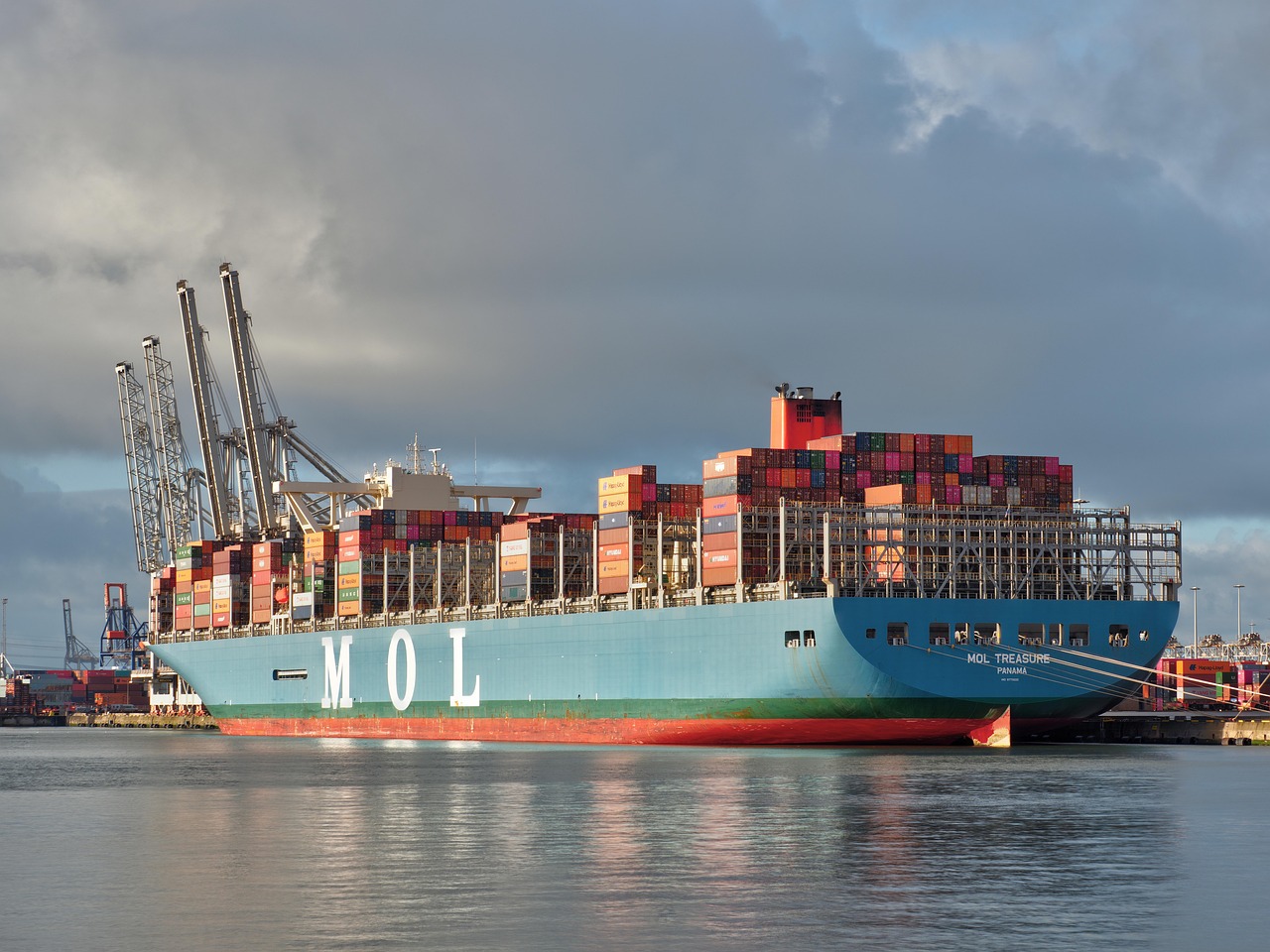
The development of carbon capture and storage (CCS) technologies has surged over the past decade, creating new opportunities for the shipping industry. This evolving carbon value chain now enables innovative solutions in CO2 transport and storage, offering a viable pathway for shipping’s decarbonization.
With over 620 CCS projects identified globally as of last year, the sector is poised for significant growth, according to the Global CCS Institute. But what role does the shipping industry play in advancing CCS technologies?

Scaling Up for a Carbon-Constrained Future
The Global Carbon Project’s 2024 report highlighted a troubling reality: carbon emissions from fossil fuels reached a record 41.6 billion tons, up from 40.6 billion tons the previous year. The report concluded that no peak in CO2 emissions is in sight, signaling the urgent need for comprehensive solutions.
While clean fuel adoption is underway, it requires large-scale measures like CCS to bridge the gap. CCS captures CO2 from emissions sources and stores it underground, often in depleted offshore oil and gas reservoirs. However, environmental concerns regarding CO2 leakage have prompted an alternative approach—carbon capture and utilization (CCU).
Instead of storage, CCU transforms captured CO2 into valuable industrial chemicals. This process underpins the production of synthetic fuels essential for shipping’s decarbonization.
The Rise of the CO2 Value Chain
CCS, though utilized for decades, remains an emerging technology. Recent climate initiatives have significantly increased its demand, especially in the energy sector. A pivotal outcome of CCS growth is the creation of a robust CO2 value chain.
The shipping industry stands to benefit, particularly through liquefied CO2 (LCO2) carriers. According to DNV’s 2023 Energy Transition Outlook, the global fleet of LCO2 carriers could expand to 41 ships by 2030, 124 ships by 2040, and 270 ships by 2050. This number could soar to 2,500 if governments worldwide achieve net-zero climate goals. However, substantial investments are required to build this fleet.
Overcoming Barriers to Onboard Carbon Capture
CCS offers a mid-term solution for decarbonizing the shipping industry. With nearly 90% of the global fleet operating on fossil fuels, onboard carbon capture and storage (OCCS) provides a practical emissions reduction option.
OCCS retrofits could reduce CO2 emissions by 10–40% per vessel, depending on the type and size. However, challenges remain. DNV estimates that retrofitting costs range from $1–15 million per ship, with installation taking approximately 12 months.
Regulatory uncertainty also hampers progress. According to Mathias Sørhaug, DNV’s Business Development Director for CO2 Shipping, a lack of clear frameworks for crediting captured CO2 discourages investment. Robust policies supporting CO2 transport, storage, and utilization infrastructure are essential for OCCS scalability.
The International Maritime Organization (IMO) has announced plans for an OCCS working framework by 2028, aiming to address these gaps.
Promising Pilot Projects
Pilot projects are driving advancements in OCCS technology. For instance, Seatrium recently completed a CCS retrofit on the LPG tanker Clipper Eris. This year-long pilot study involves Wärtsilä, SINTEF, and Solvang, the ship’s Norwegian owner. The system is designed to capture 70% of CO2 emissions from the ship’s main engine.
In a similar vein, Malaysia’s Yinson launched the FPSO Agogo, the world’s first FPSO equipped with post-combustion carbon capture technology. Operating off Angola’s coast, the FPSO could reduce CO2 emissions by 230,000 tons annually, thanks to an absorbent-based capture system.
Brazil’s Petrobas has also initiated studies on modular CCS solutions for FPSOs, collaborating with SBM Offshore and Mitsubishi Heavy Industries.
Port Infrastructure: The Missing Link
Effective carbon capture systems rely on robust offloading infrastructure at ports. Currently, few ports can handle liquefied CO2, but progress is underway.
The Northern Lights project in Norway has established a CO2 storage terminal at Øygarden, with pipelines transporting LCO2 to offshore storage sites. By 2030, additional ports in Europe and Asia, including Rotterdam, Gdansk, and Zhoushan, are expected to develop similar facilities.
In the U.K., over $28 billion has been committed to CCS initiatives over the next 25 years, signaling a strong push toward port readiness.
Pathway to Shipping’s Sustainable Future
The integration of CCS and CCU technologies into the shipping industry marks a critical step toward achieving sustainability. Through continued investment in innovative solutions and infrastructure, the sector can navigate the challenges of decarbonization while maintaining its vital role in global trade.
