

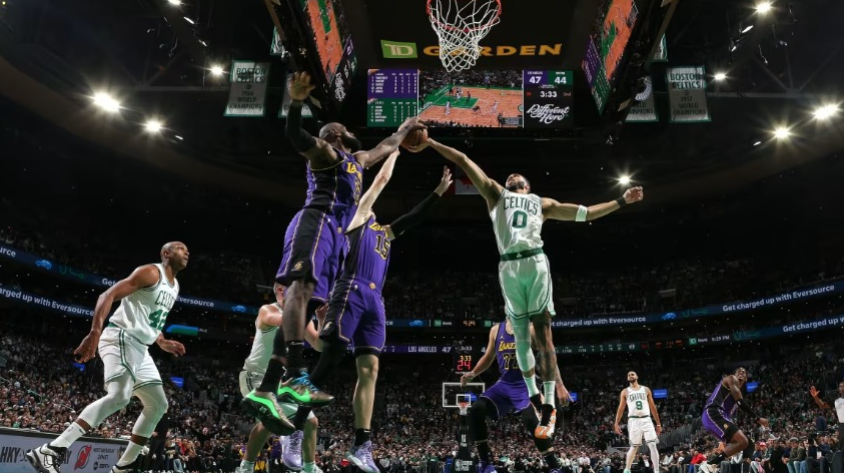
The Los Angeles Lakers, one of the most storied teams in NBA history, have claimed a remarkable milestone with a franchise valuation of $10 billion. This achievement eclipses the Boston Celtics, their longtime rivals, who previously held the record for the highest sports team valuation with a $6 billion price tag just months earlier.
However, this record may soon be surpassed. The NFL’s New York Giants are exploring the sale of a 10% ownership stake. If completed, this deal could push the team’s total valuation beyond $10 billion, according to Marc Ganis, a Chicago-based sports consultant who advises teams in the NFL, NBA, and MLB. This highlights the ongoing surge in sports franchise values, driven by rising demand and limited supply.

Rapid Growth in Sports Franchise Values
In the last three decades, sports franchises have consistently sold for higher prices than their previous valuations. Victor Matheson, a sports economics professor at the College of the Holy Cross, noted that no team has sold for less than its purchase price during his career. For example, in 2024, a 10% stake in the Milwaukee Bucks sold for a valuation of $4 billion. This marks a significant increase from the team’s $550 million valuation just a decade earlier.
Although the Lakers’ $10 billion valuation is groundbreaking, it reflects a broader trend. High-profile sports franchises are increasingly seen as valuable assets, making them attractive to wealthy investors.
Why Sports Franchise Values Are Soaring
Sports franchises are considered “trophy assets” due to their scarcity and cultural significance. Sal Galatioto, a leading sports investment banker, explains that limited supply and rising demand drive up prices. “When the supply is fixed, and demand increases, prices naturally climb,” he stated.
The evolving media landscape has played a significant role in boosting valuations. Live sports programming remains a dominant force in the entertainment industry. With streaming platforms and cord-cutting reshaping how audiences consume content, advertisers increasingly rely on live sports to reach viewers. Major sporting events consistently rank among the most-watched broadcasts on television.
Lori Bistis, a deals partner at PricewaterhouseCoopers specializing in sports, attributes this trend to the value of television rights deals. “Sports content is the lifeblood of the media industry,” she explained. “The data shows continued growth in franchise valuations alongside lucrative broadcast agreements.”
New Revenue Streams Fueling Growth
In addition to media rights, sports franchises are leveraging data to generate revenue. Buyers gain access to valuable insights into fan demographics and spending behaviors. This data allows franchises to enhance viewing experiences, increase merchandise sales, and host profitable events.
The legalization of sports betting in 2018 has also fueled interest in sports franchises and programming. Galatioto highlights that sports gaming has created new opportunities for engagement and monetization, contributing to the upward trend in team valuations.
The Role of Wealthy Investors
The influx of high-net-worth individuals into sports ownership has further elevated franchise values. Minority stakes in teams are particularly attractive to investors, as they offer the prestige and perks of ownership without requiring full control.
“There’s a lot of new money coming into the business,” Galatioto noted. “Investors are willing to pay premiums for the unique value of owning a sports franchise.”
Mark Walter, CEO of Guggenheim Partners and a leading investor, exemplifies this trend. Walter’s recent purchase of a controlling stake in the Lakers illustrates how minority owners can transition into majority ownership. Walter previously held a 27% stake in the team and acquired additional shares to surpass the 50% ownership threshold. This deal did not require him to pay the full $10 billion valuation, making it a strategic and cost-effective acquisition.

Impact on Team Success
While wealthy owners can provide significant financial resources, their impact on team success is not always straightforward. In Major League Baseball (MLB), teams with high payrolls often perform better during the regular season. However, only two teams with the top payrolls have won the World Series in the past 15 years—the Boston Red Sox in 2018 and the Los Angeles Dodgers in 2020.
Victor Matheson’s research indicates that payrolls account for only 30% of a team’s success. The remaining 70% depends on factors such as effective management, injury prevention, and luck. “Fans always want owners who are willing to spend, but spending doesn’t guarantee championships,” Matheson explained.
Leagues with salary caps, such as the NFL and NHL, limit the financial influence of wealthy owners. These caps create a more level playing field, emphasizing strategic decisions over financial investments.
The Future of Sports Franchises
The rise in sports franchise valuations shows no signs of slowing. Streaming platforms’ growing interest in broadcasting games and the continued popularity of live sports ensure that these assets remain highly coveted.
The Lakers’ $10 billion valuation underscores the enduring appeal of premier sports franchises. As demand continues to outpace supply, prices are likely to climb further. For fans, this trend highlights the intersection of business and passion, as franchises balance profitability with the pursuit of championships.
