

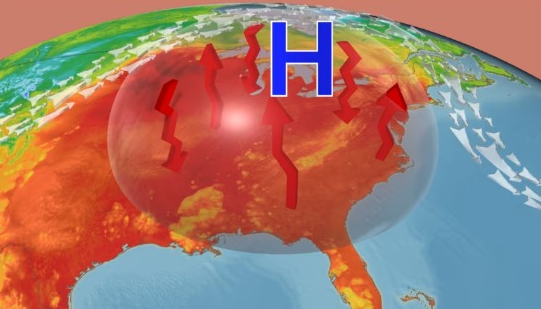
The eastern half of the United States is bracing for its most intense heat of the year as a brutal heat dome develops over the weekend. Millions will face dangerous, record-breaking temperatures, with heat warnings issued for multiple states.
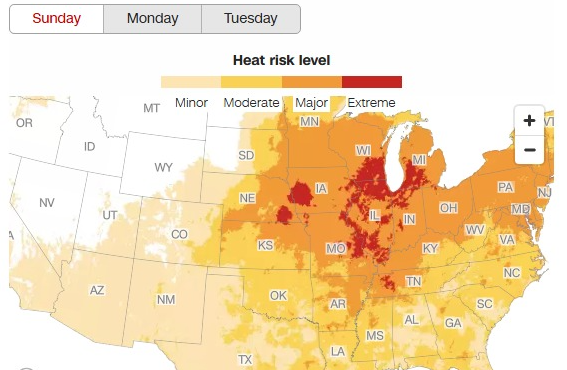
National Weather Service Issues Extreme Heat Risk Warning
The National Weather Service (NWS) has declared a level 4-of-4 extreme heat risk from Sunday through at least Thursday. This prolonged heatwave, accompanied by minimal overnight relief, poses significant risks to those without proper cooling or hydration.
“Such long-lasting heat is rare and can result in severe health impacts for vulnerable populations,” the NWS stated.
Record-Breaking Temperatures Expected Across Regions
\High temperatures will climb to at least 15 degrees above average in the Plains, Midwest, Mid-Atlantic, and Northeast. Many areas will see their hottest days of the year, with temperatures soaring into the 90s and heat indices reaching 110 degrees due to high humidity.
Forecast highlights include:
- New York City: Temperatures could reach 97 degrees Sunday through Tuesday, potentially breaking daily records.
- Washington, DC: Highs might hit 100 degrees, matching or surpassing previous records.
- Boston: Expected highs of 90 degrees on Monday and 94 on Tuesday, nearing historical benchmarks from the mid-1990s.
Over 250 daily records for both high temperatures and warm nighttime lows could be shattered on Monday and Tuesday, some at locations with weather data dating back over a century.
The Deadliest Form of Extreme Weather
Heat remains the deadliest extreme weather event in the U.S., contributing to over 800 fatalities annually since 1999, according to a 2023 study. Prolonged heatwaves disproportionately affect public health, especially in areas not accustomed to extreme heat. Emergency room visits for heat-related illnesses surge during major and extreme heat risk periods, exacerbated by high humidity and warm nights that prevent the body from cooling adequately.
Rising Nighttime Temperatures: A Growing Threat
Climate change has caused nighttime temperatures to rise faster than daytime highs. This trend makes it harder for the human body to recover, increasing the likelihood of heat-related illnesses and fatalities. Warm nights compound the risks by leaving no reprieve from daytime heat, particularly for individuals without air conditioning or proper cooling solutions.
Summer Solstice Amplifies Heat Intensity
The current heatwave coincides with the summer solstice, which occurred on Friday at 10:42 p.m. ET. This marks the official start of astronomical summer in the Northern Hemisphere, with the highest sun angles and longest days of the year providing ample solar energy to fuel extreme heat.
Meteorologists, however, define summer as beginning on June 1, aligning with calendar months to track seasonal weather patterns. Despite this early-season event, the hottest weeks of the year typically occur in July and August for most of the U.S., aside from parts of the Desert Southwest.

Health and Safety Precautions During Extreme Heat
To mitigate the dangers of extreme heat, the NWS urges individuals to:
- Stay hydrated and drink plenty of water.
- Avoid outdoor activities during peak heat hours.
- Use air conditioning or seek public cooling centers.
- Check on elderly neighbors and vulnerable individuals.
Upcoming Heat Trends and Long-Term Outlook
Although this heatwave is expected to ease by the end of next week, it serves as a stark preview of the extreme temperatures likely to dominate the summer months. Meteorologists warn that as climate change continues to exacerbate weather patterns, heatwaves will grow more frequent, intense, and prolonged.
