

Canada Fast-Tracks Icebreaker Fleet as Arctic Melts and Geopolitical Tensions Rise
For generations, the Beaufort Gyre, a rotating body of sea ice in the Arctic, has expanded and receded with seasonal changes. Circulating between Canada, Russia, and Alaska, it once fostered the formation of thick, perennial ice sheets. Now, climate change is rapidly altering this pattern, causing a dramatic reduction in long-lasting sea ice. As the gyre continues to spin, it disperses fragmented ice, clogging Arctic channels and increasing navigational hazards.
Canada’s coast guard encapsulates this paradox in one phrase: “less ice means more ice.” As large ice masses disappear, smaller, more chaotic chunks take their place, creating dangerous conditions. Contrary to popular belief, global warming has intensified the demand for icebreakers.
Canada’s Icebreaker Strategy
Arctic security expert Robert Huebert of the University of Calgary states, “Many people assume less ice equals easier sailing. But the coast guard’s experience shows we now need even more powerful icebreakers.”
Recognizing the urgency, Canada is pushing forward with an ambitious plan to build a new fleet of heavy-duty icebreaking vessels. This move reflects growing interest from major powers in the Arctic as melting ice exposes new shipping corridors and mineral resources. Canada joins the U.S., Russia, and China in aggressively pursuing ice-capable fleets.
The Arpatuuq: Canada’s New Flagship
Construction is underway at Seaspan’s North Vancouver shipyard on the Arpatuuq, a 520-foot icebreaker designed for Arctic missions in temperatures as low as -50°C (-58°F). The CAD 3.15 billion (USD 2.32 billion) project is scheduled for completion within five years. Upon launch, the Arpatuuq will become a key asset in Canada’s national shipbuilding program.
This initiative not only seeks to upgrade Canada’s aging icebreaker fleet but also reinforces its Arctic sovereignty after years of delays and bureaucratic obstacles. As a class 2 vessel, the Arpatuuq will function year-round, capable of breaking ice up to 10 feet thick.
According to Seaspan’s Vice President of Production, Eddie Schehr, building an icebreaker is comparable to crafting a mobile city. “Even with advanced technology, problems often arise at the final stages—and they always do,” he says.
Constructed using 60mm-thick steel plates and specialized welding techniques, the Arpatuuq is built to withstand severe Arctic conditions. “This ship is twice the size and strength of a typical vessel. It requires a completely different engineering approach,” Schehr adds.

Delays and Restarted Ambitions
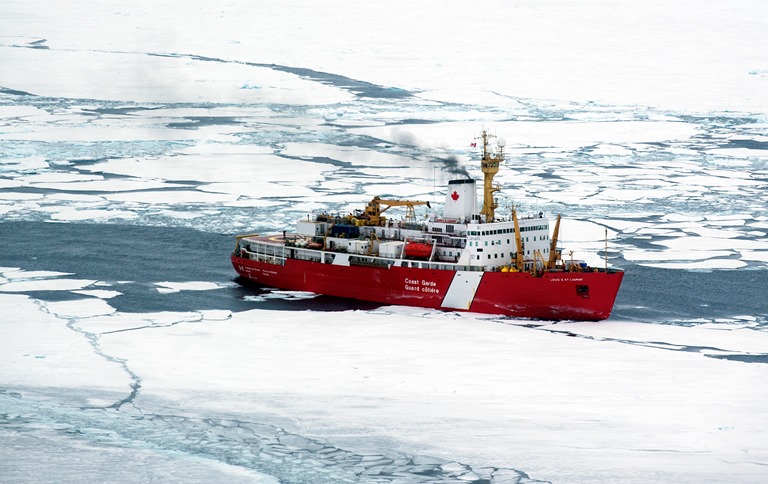
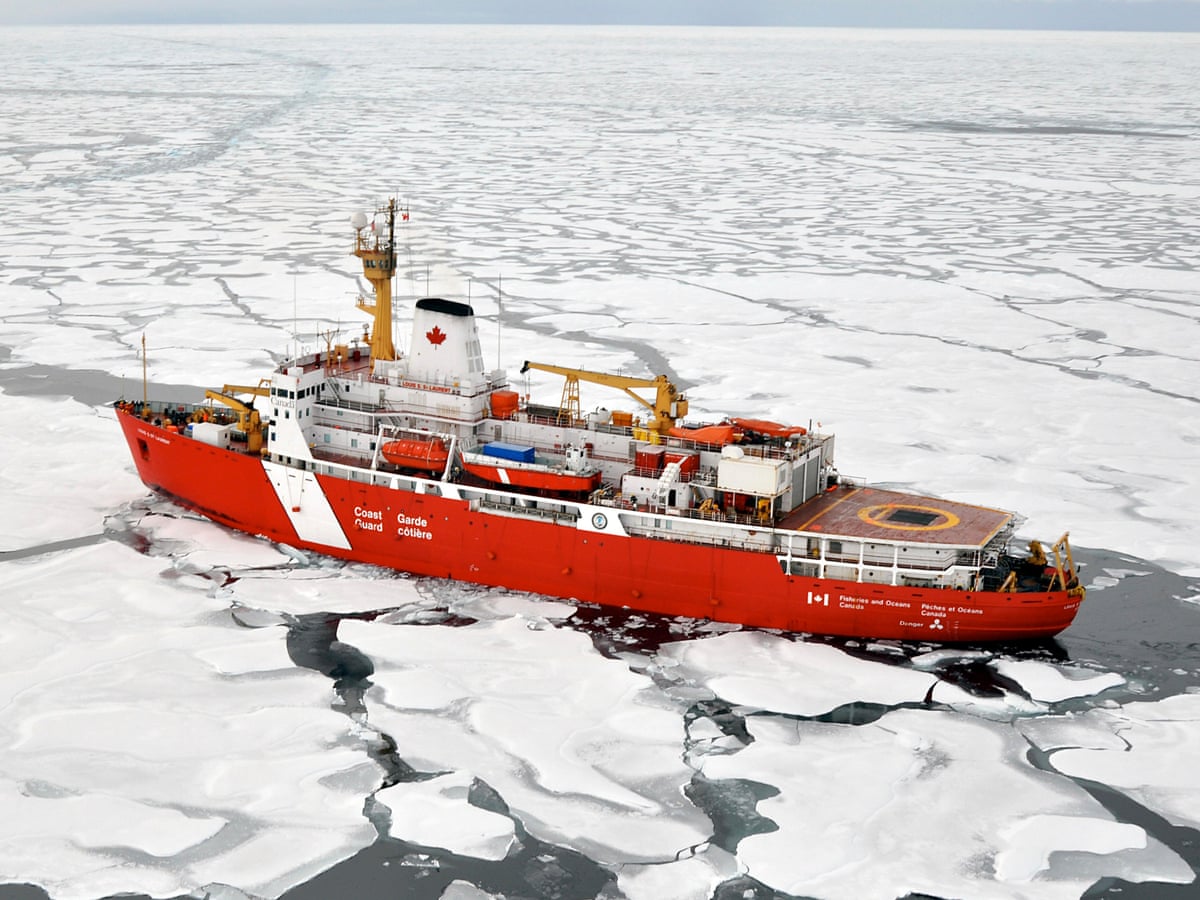
The Arpatuuq replaces the Louis S. St-Laurent, Canada’s largest and only heavy icebreaker, in service since the 1960s. Although plans to build a successor date back to 1985, they were repeatedly shelved.
In 2008, Prime Minister Stephen Harper promised a new vessel named the John G. Diefenbaker, which was also never built. Ironically, Schehr studied its blueprints during university. Today, he leads the construction of the same ship—renamed the Arpatuuq.
Expanding Shipbuilding Capability
Alongside Seaspan, Davie Shipbuilding in Quebec has been tapped to build an additional heavy icebreaker. To enhance capacity, Davie acquired shipyards in Helsinki in 2024 and the U.S. in 2025. These strategic moves help Davie comply with U.S. laws that limit foreign contracts.
Some experts, like Huebert, criticize the split production model, arguing it creates training and maintenance inefficiencies. “This is the most costly and inefficient way to build ships. But the need for icebreakers is too urgent to delay,” he asserts.
The Global Race for Arctic Control
Canada’s efforts mirror a global race for Arctic dominance. Russia leads with over 50 icebreakers, including many capable of navigating extreme conditions. China reportedly has four vessels suitable for Arctic missions.
Former U.S. President Donald Trump advocated for a fleet of 40 American icebreakers, indicating heightened geopolitical competition. Opening the Northwest Passage could significantly reduce shipping times between Asia and Europe, making Arctic control a high-stakes game.
National Security and Infrastructure
Canada has tied its Arctic investments to defense. Experts stress that asserting sovereignty goes beyond building icebreakers. Satellite systems, radar networks, and submarines are also necessary.
“Icebreakers alone won’t guarantee control. They must be part of a larger Arctic infrastructure,” says Huebert.
Yet some analysts, like University of British Columbia professor Michael Byers, caution against framing Arctic development as an arms race. “Canada needs reliable ships, not panic over Russian or Chinese intentions,” he argues.
Byers also points out that thinner ice can increase danger. As ships travel through open waters in freezing temperatures, sea spray may accumulate on the hull, causing top-heavy imbalances that can lead to capsizing. “Despite warming, the Arctic remains a perilous zone. We will always need capable icebreakers,” he concludes.
International Alliances
In July, Canada, the U.S., and Finland signed the Ice Pact during a NATO summit in Washington. The agreement aims to collectively produce up to 90 icebreakers. With Finland already responsible for 80% of ice-capable ships globally, this collaboration could reshape shipbuilding dynamics.
Seaspan and Davie both aim to become suppliers for the U.S. Coast Guard, leveraging their new production facilities and Arctic expertise.
Looking Ahead: Arctic Preparedness
With the Arctic rapidly transforming, Canada’s icebreaker construction marks a strategic shift. These ships are not just vessels—they represent a broader commitment to security, commerce, and environmental adaptation.
Whether breaking through treacherous ice or supporting new shipping lanes, Canada’s renewed focus on Arctic readiness is crucial. The ice may be melting, but the need for strong leadership and capable vessels remains stronger than ever.
