

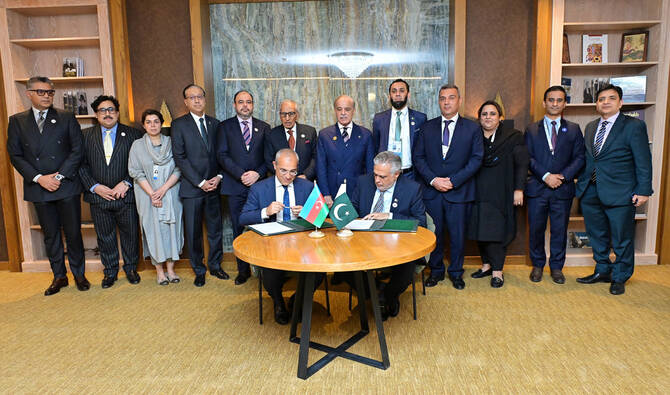
Azerbaijan Signs $2 Billion Investment Agreement with Pakistan at ECO Summit
ISLAMABAD: Pakistan investment deal Azerbaijan has signed investment agreements totaling $2 billion with Pakistan, marking a significant enhancement in economic cooperation during Prime Minister Shehbaz Sharif’s visit to Azerbaijan for the Economic Cooperation Organization (ECO) summit.
Held in Khankendi, the two-day ECO summit centered on fostering a sustainable and climate-resilient future for the region. This major agreement marks a pivotal moment in economic relations between the two nations.
Leaders Witness Historic Deal
The investment pact was formalized during a high-level meeting between Prime Minister Sharif and Azerbaijani President Ilham Aliyev. In the presence of Sharif, Deputy Prime Minister and Foreign Minister Ishaq Dar, and Azerbaijan’s Minister of Economy Mikayil Jabbarov, both sides signed the agreements.
According to the Prime Minister’s Office, the investment will target key sectors of Pakistan’s economy and reflects the mutual intent to deepen economic ties. Officials anticipate additional agreements during President Aliyev’s upcoming visit to Islamabad.
Diplomatic Momentum
The official statement described the development as a milestone that has elevated trade and investment ties to an unprecedented level. This achievement, officials said, is the result of persistent coordination between Pakistani ministries, diplomats, and their Azerbaijani counterparts over recent months.
“This agreement serves as a catalyst for strengthening brotherly relations and commercial collaboration between Pakistan and Azerbaijan,” the statement noted.

ECO Summit Focuses on Climate and Regional Prosperity
During his address at the summit, Prime Minister Sharif highlighted the urgent challenges posed by climate change, calling it a grave threat to ECO member nations. He cited the melting of glaciers, worsening floods, desertification, and declining agricultural yields as evidence.
Sharif emphasized the need for greater regional trade, tourism, and connectivity as tools to ensure sustainable economic growth and long-term resilience.
Sideline Meetings Bolster Regional Ties
Prime Minister Sharif also met with key regional leaders, including the presidents of Turkiye, Iran, and Uzbekistan, to reaffirm Pakistan’s commitment to regional peace and economic integration.
Meeting with Turkish President Erdoğan
In his session with Turkish President Recep Tayyip Erdoğan, the two leaders reviewed bilateral ties and agreed to accelerate cooperation in areas like defense, trade, investment, energy, and regional connectivity.
Both sides committed to exchange high-level delegations to push forward previously agreed initiatives and foster deeper institutional engagement.
Dialogue with Iranian President Pezeshkian
Sharif also held a meaningful discussion with Iranian President Dr. Masoud Pezeshkian, where both parties reaffirmed their intention to implement past agreements and strengthen bilateral relations.
Sharif lauded Iran’s leadership during recent regional tensions and welcomed Tehran’s support for a ceasefire initiative. He pledged that Pakistan will maintain unwavering solidarity with Iran and will continue promoting dialogue and diplomacy to secure peace in the region.
Strategic Talks with Uzbekistan
Prime Minister Sharif’s meeting with Uzbek President Shavkat Mirziyoyev revolved around energy cooperation, trade development, and the progress of the Trans-Afghan Railway Project—a strategic initiative to link Central and South Asia through Pakistan.
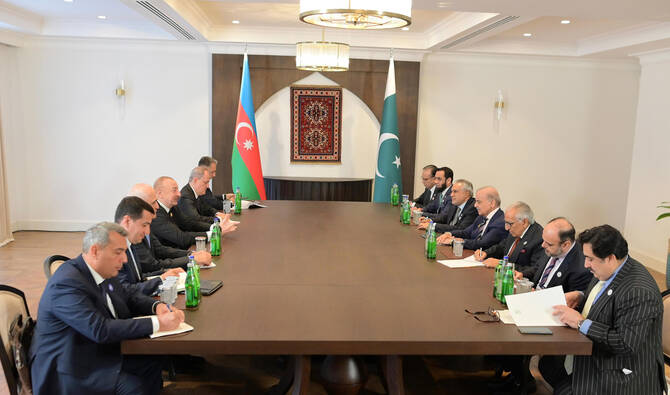
The leaders agreed to facilitate ministerial visits between Tashkent and Islamabad to finalize cooperation agreements. Both nations acknowledged their deep historical ties as a firm foundation for future partnerships.
Azerbaijan Investment Boosts Confidence in Pakistan’s Economy
The $2 billion investment represents a significant vote of confidence in Pakistan’s economic potential. Azerbaijan’s commitment spans across sectors such as energy, infrastructure, agriculture, logistics, and tourism.
This agreement signals that Pakistan is emerging as a reliable partner for regional investment and economic integration, especially under Shehbaz Sharif’s leadership.
Anticipated Outcomes and Regional Implications
The deal is likely to attract further interest from other ECO member states, with Pakistan offering a strategic gateway to regional markets. The country’s growing infrastructure and connectivity projects—such as CPEC, the TAPI pipeline, and regional railway networks—make it an ideal platform for regional trade.
Sharif’s proactive diplomacy at the summit shows Pakistan’s readiness to serve as a hub for economic, energy, and cultural exchanges across Eurasia.
Conclusion
The signing of $2 billion investment agreements between Azerbaijan and Pakistan at the ECO summit marks a landmark moment in bilateral diplomacy and economic collaboration. With visionary leadership, strategic planning, and mutual trust, the two nations are now poised to build a lasting economic partnership.
This milestone also reinforces Pakistan’s central role in shaping the future of regional cooperation, connectivity, and sustainable development in Central and South Asia.
This landmark investment signals a new era of economic diplomacy between Pakistan and Azerbaijan. As both nations continue to strengthen their strategic ties, the agreement is expected to unlock vast opportunities in trade, infrastructure, and regional connectivity. With high-level visits and sector-specific cooperation planned, this partnership lays a solid foundation for long-term development and mutual prosperity. The $2 billion deal also reflects growing international confidence in Pakistan’s economic potential and highlights its role as a key player in the region’s future. This partnership is also expected to inspire other ECO member states to pursue similar economic collaborations.
