

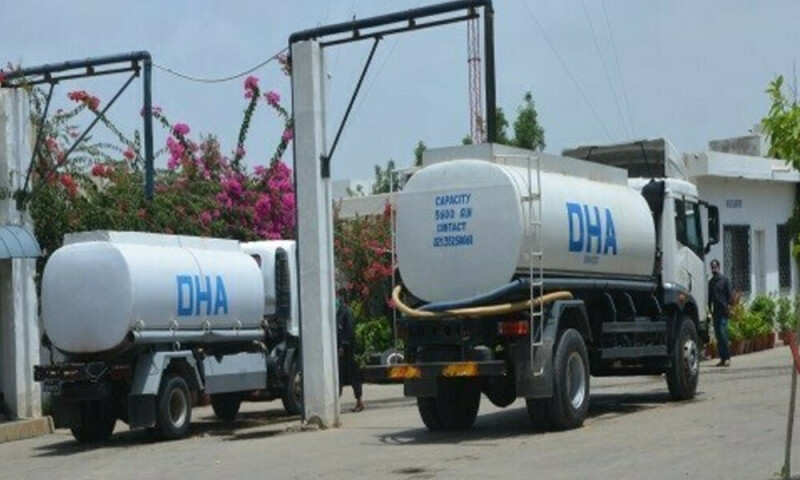
KARACHI – In a significant step toward resolving Karachi’s deepening water crisis, particularly in the Defence Housing Authority (DHA), Sindh Chief Minister Syed Murad Ali Shah has approved a Rs. 10.56 billion interest-free loan for the Karachi Water and Sewerage Corporation (KW&SC). This decision, made during a comprehensive cabinet meeting at the Chief Minister’s House, accompanies several key development initiatives targeting long-term growth and resilience.
Urgent Action for DHA’s Water Shortage
Water scarcity in DHA has reached alarming levels. At present, residents receive only 4–5 million gallons per day (MGD), falling well short of the area’s expanding demand. To address this, the government has sanctioned a major project that involves laying a 36-kilometer pipeline from Dumlottee to DHA.
Additionally, the plan includes construction of a pumping station, forebay, and filtration plant to ensure quality water delivery. Although KW&SC proposed the project earlier in February 2025, it now has full cabinet approval. The Chief Minister has directed the utility to complete it within 11 months, highlighting the urgency of the matter.
“Our objective goes beyond crisis management we’re preparing for Karachi’s future,” Shah remarked.
Agricultural Tax Reforms Aim for Fairness
Alongside infrastructure projects, the cabinet also approved the Sindh Agricultural Income Tax Rules, 2025, marking a new era of accountability for income generated through farming. These rules introduce clear procedures for registration, tax filing, and record maintenance.
According to the new rules, agricultural income earners must register using Form AIT-01 and submit returns with Form AIT-03. Records must be maintained in Urdu, Sindhi, or English. Importantly, losses due to calamities can be carried forward into the next fiscal year.
To streamline implementation, a dedicated subcommittee will oversee the finalization process. It includes representatives from the agriculture, law, and works & services ministries.
Paperless Property Transactions Introduced
In a move toward digital governance, the cabinet approved an amendment to the Sindh E-Stamp Rules, 2020. This change eliminates the need for physical stamp paper in areas where electronic registration systems are operational.
Through this update, stamp duty payments can now be verified digitally. Moreover, it allows seamless integration with e-registration services. Already, 51 sub-registrar offices are using the digital process. As a result, property transactions will become faster and more transparent.
Flood Relief Boosted for Farmers
Recognizing the lingering effects of the 2022 floods, the cabinet increased the Flood Emergency Response Component (FERC) allocation from Rs. 21.56 billion to Rs. 27.67 billion. The revised budget will support over 151,000 verified farmers who suffered heavy losses.
To speed up support, the government allocated Rs. 6.1 billion for the remaining disbursement phases. An additional Rs. 2.37 billion in savings will be used under the Benazir Hari Card scheme. This multi-pronged initiative offers subsidies for agricultural inputs, disaster-related cash relief, soft loans, solar tube wells, and crop insurance.
So far, 237,125 farmers have enrolled, and 88,871 applications have been verified for further processing and card issuance.
Rs. 45 Billion Railway Project to Strengthen Energy Logistics
The cabinet has also approved a Rs. 45.02 billion railway link connecting Islamkot (Thar Coalfield) to Chorr. Designed to enhance the transport of Thar coal to ports, this project will play a vital role in supporting Pakistan’s energy sector.
Planned in collaboration with the federal government, it includes a 105-kilometer rail line, a 9-kilometer dual track from Bin Qasim to Port Qasim, and a dedicated unloading terminal. The federal government has already committed Rs. 7 billion in the PSDP 2025–26, which the Chief Minister ordered to be released immediately.
Notably, this two-year project is expected to stimulate industrial growth and improve logistics efficiency.
Industrial Enclaves Set to Create Over 55,000 Jobs
To accelerate economic development, the Sindh government has approved the establishment of New Industrial Enclaves on 951 acres in District Hyderabad. These zones will operate under a Public Private Partnership (PPP) model.

As part of the plan, land will be handed over to the Sindh Economic Zones Management Company (SEZMC). The Finance Department will release Rs. 3.54 billion to facilitate the acquisition. Consultants have already been appointed to handle feasibility studies and transaction structuring.
Once completed, the project is expected to create over 55,000 direct and indirect employment opportunities.
M-6 Motorway Land Secured for National Connectivity
To support the ongoing Hyderabad–Sukkur Motorway (M-6), the cabinet approved the allocation of 248 acres of land valued at Rs. 667.23 million. Additional land across Jamshoro, Matiari, Shaheed Benazirabad, Sukkur, and Naushahro Feroze was also reserved, pending departmental no-objection certificates (NOCs).
Furthermore, Chief Minister Shah authorized bridge financing to ensure uninterrupted construction if funding delays occur.
Leadership for Transparent and Sustainable Development
At the meeting’s conclusion, Chief Minister Syed Murad Ali Shah reaffirmed his commitment to sustainable and inclusive growth. He emphasized the importance of timely execution, interdepartmental cooperation, and transparent governance.
“These decisions are not just policy; they are promises to the people of Sindh,” he noted. “By combining infrastructure with social equity, we are building a resilient future.”
A Bold Vision for Sindh’s Future
The cabinet discussed 52 key agenda items, making this one of the most impactful meetings of the year. Every decision from the interest-free loan for DHA water to digital reforms and energy transport reflects a larger strategic vision.
The Rs. 10.5 billion loan for KW&SC will do more than just improve water supply; it will restore public confidence. Similarly, projects like the Thar railway link and new industrial zones show that the government is aligning infrastructure, energy, and employment with future goals.
In doing so, Sindh is not only addressing today’s challenges but also laying a strong foundation for tomorrow.
Read more Latest News
