

ISLAMABAD — Pakistan Seafood Trade Pakistan’s seafood exports recorded a significant rise in the fiscal year 2024–25, reaching USD 489.2 million, a 20.5% increase from USD 406 million in FY 2023–24. This positive trend, according to the Marine Fisheries Department’s report, indicates stronger performance driven by several proactive government initiatives and rising global demand. Furthermore, export volume also saw a notable growth of 19.8%, jumping from 202,400 to 242,484 metric tons.
Federal Minister for Maritime Affairs Muhammad Junaid Anwar Chaudhry credited this success to enhanced regulatory oversight, increased export diversification, and improved international market access. Indeed, these factors have helped solidify Pakistan’s standing in the global seafood trade.
Strong Trade Ties with China and Regional Markets
Importantly, China retained its position as Pakistan’s largest seafood importer. It purchased over 99,238 metric tons valued at USD 186 million, reflecting both consistent demand and strong bilateral trade relations. Meanwhile, Thailand secured the second spot by importing seafood worth USD 105.7 million.
Additionally, countries such as the United Arab Emirates, Malaysia, Japan, South Korea, Kuwait, Saudi Arabia, Vietnam, and Indonesia contributed significantly to Pakistan’s export earnings. Notably, exports to the European Union surged by 44.4%, totaling USD 13 million. This increase illustrates Pakistan’s growing compliance with stringent quality and sustainability standards required by the EU.
Diversification of Seafood Products
The product-wise breakdown of seafood exports revealed a commendable diversification in the types of marine products exported.
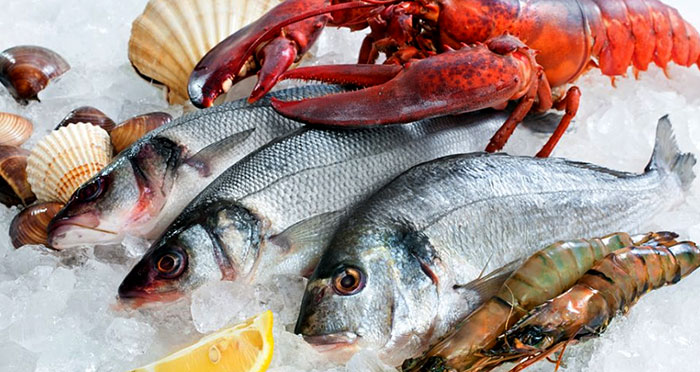
To begin with, fish meal led the category with 79,090 metric tons, fetching USD 160 million. It continues to be in high demand, primarily for its use in animal feed and agriculture.
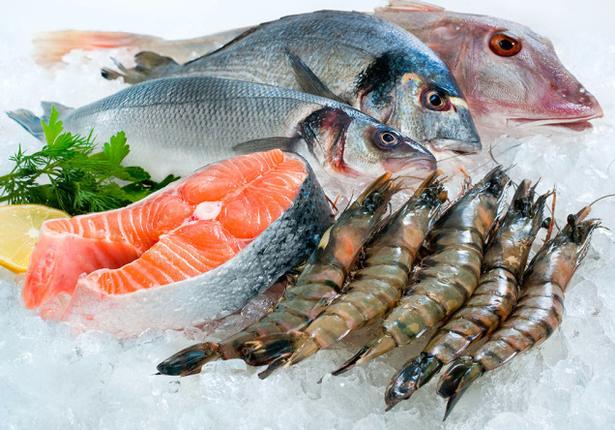
Moreover, frozen fish earned USD 103.11 million, reflecting Pakistan’s capacity to preserve and export bulk products efficiently. Shrimps brought in USD 61.4 million, followed by crabs at USD 29.68 million and mackerels at USD 23 million.
In addition to these, species such as sole, jellyfish, skates, and eels were also exported, further emphasizing Pakistan’s ability to supply a wide variety of seafood items.

Increase in Non-Tax Revenue
Another remarkable development was the sharp increase in non-tax revenue, which grew by 131.7%. It rose from PKR 101 million in FY 2023–24 to PKR 234 million in FY 2024–25. Minister Chaudhry attributed this increase to improved regulatory mechanisms and enhanced efficiency in fee collection.
As a result, the fisheries sector not only contributed to export earnings but also enhanced its role in domestic revenue generation. These improvements signify a healthier, more accountable industry.
Government Reforms Boost Sector Confidence
Minister Chaudhry stated that the government’s strategic efforts have modernized the fisheries sector.
These efforts included:
- Upgrading coastal and inland infrastructure
- Promoting sustainable fishing practices
- Implementing international health and safety standards
- Improving inspection and monitoring systems
Consequently, these reforms have enabled exporters to meet global quality benchmarks, especially in sensitive markets like the EU.
Additionally, Chaudhry emphasized the importance of building cold-chain logistics and enhancing the capabilities of seafood processing facilities. In his view, maintaining these investments will keep Pakistan competitive.
Vision for Future Expansion
Looking ahead, the government plans to pursue three primary strategies:
1. Enhanced Export Infrastructure
Firstly, expanding and modernizing fish harbors and increasing the number of processing units remain top priorities. Furthermore, the installation of modern inspection and compliance systems is under review.
2. Improved Resource Management
Secondly, authorities aim to enforce seasonal fishing bans, regulate catch sizes, and support marine conservation. Through better management, the government seeks to protect marine ecosystems and ensure long-term sustainability.
3. Diversification into New Markets
Thirdly, Pakistan is actively exploring markets in Africa, Central Asia, and South America. Additionally, maintaining momentum in established markets like China and the EU will be vital to sustaining growth.
Minister Chaudhry asserted that responsible expansion and strategic market penetration are key to elevating Pakistan’s position in the global seafood trade.
Addressing Industry Challenges
Despite the progress, several challenges must be addressed to sustain long-term growth.
For instance, issues such as illegal, unreported, and unregulated (IUU) fishing, overfishing, and marine pollution pose serious threats. Additionally, lack of private investment in areas like aquaculture and deep-sea fishing continues to hinder the sector’s full potential.
Furthermore, the inclusion of women and small-scale fishers in the formal economy remains limited. The ministry aims to resolve this through community engagement and targeted capacity-building programs.
Conclusion: A Sector on the Rise
In summary, FY 2024–25 has been a landmark year for Pakistan seafood exports. Both export volume and value have risen significantly due to better governance, international partnerships, and growing market demand.
Pakistan has demonstrated that with the right combination of reforms and investments, the fisheries sector can serve as a robust engine of economic growth. Indeed, Minister Chaudhry’s vision to continue improving compliance, promoting responsible fishing, and exploring new markets reflects the strategic direction necessary for sustained success.
Overall, the momentum achieved in FY 2024–25 lays a strong foundation for Pakistan to emerge as a global leader in sustainable seafood exports.
This momentum signals Pakistan’s readiness to lead globally in sustainable seafood exports, ensuring long-term economic and environmental resilience.
Read more Latest News
