

The global shipping industry plays a vital role in international trade and economic growth. With increasing globalization and e-commerce demand, sea freight continues to dominate as the most cost-effective method of transporting goods worldwide. A commonly asked question is, how many shipping lines are in the world? This article will answer that question and also highlight the top ten shipping lines in the world based on container capacity, global coverage, and industry influence.
How Many Shipping Lines Are in the World?
There are more than 100 active shipping lines operating globally. These include international container carriers, regional cargo lines, and specialized shipping companies. However, the industry is highly consolidated, with the top 10 container shipping lines controlling over 80% of the global market share in terms of Twenty-foot Equivalent Units (TEU) capacity.
The number of shipping lines may seem large, but only a few companies dominate long-distance and transcontinental shipping. These major carriers operate massive fleets and serve hundreds of ports across continents, making them crucial players in the global supply chain.

Top Ten Shipping Lines in the World.
Here is a list of the top 10 shipping lines in the world in 2025, ranked by TEU capacity and fleet size.
1. MSC (Mediterranean Shipping Company)
- Headquarters: Geneva, Switzerland
- Fleet Size: Over 790 container vessels
- TEU Capacity: More than 5.5 million
MSC is currently the world’s largest shipping line. It operates one of the most extensive global networks and continues to expand through fleet investments and strategic port partnerships.
2. Maersk Line
- Headquarters: Copenhagen, Denmark
- Fleet Size: Over 700 vessels
- TEU Capacity: Approximately 4.2 million
Maersk is a pioneer in shipping innovation and supply chain logistics. It remains one of the most trusted names in global container shipping.
3. CMA CGM Group
- Headquarters: Marseille, France
- Fleet Size: Over 600 ships
- TEU Capacity: About 3.5 million
CMA CGM has strengthened its global presence by investing in logistics, digitization, and sustainability. The company has major market share in Europe, Asia, and Africa.

4. COSCO Shipping Lines
- Headquarters: Shanghai, China
- Fleet Size: Over 500 container ships
- TEU Capacity: Over 3 million
COSCO is the largest shipping company in China and a major player in the global market, especially in Asia-Europe and transpacific trade routes.
5. Hapag-Lloyd
- Headquarters: Hamburg, Germany
- Fleet Size: Around 260 vessels
- TEU Capacity: Over 2 million
Known for its reliability and operational efficiency, Hapag-Lloyd is a major container carrier with a strong presence in Latin America and Europe.
6. ONE (Ocean Network Express)
- Headquarters: Tokyo, Japan
- Fleet Size: About 230 vessels
- TEU Capacity: Approximately 1.6 million
Formed by the merger of NYK Line, MOL, and K Line, ONE is Japan’s leading container shipping company with a strong global network.
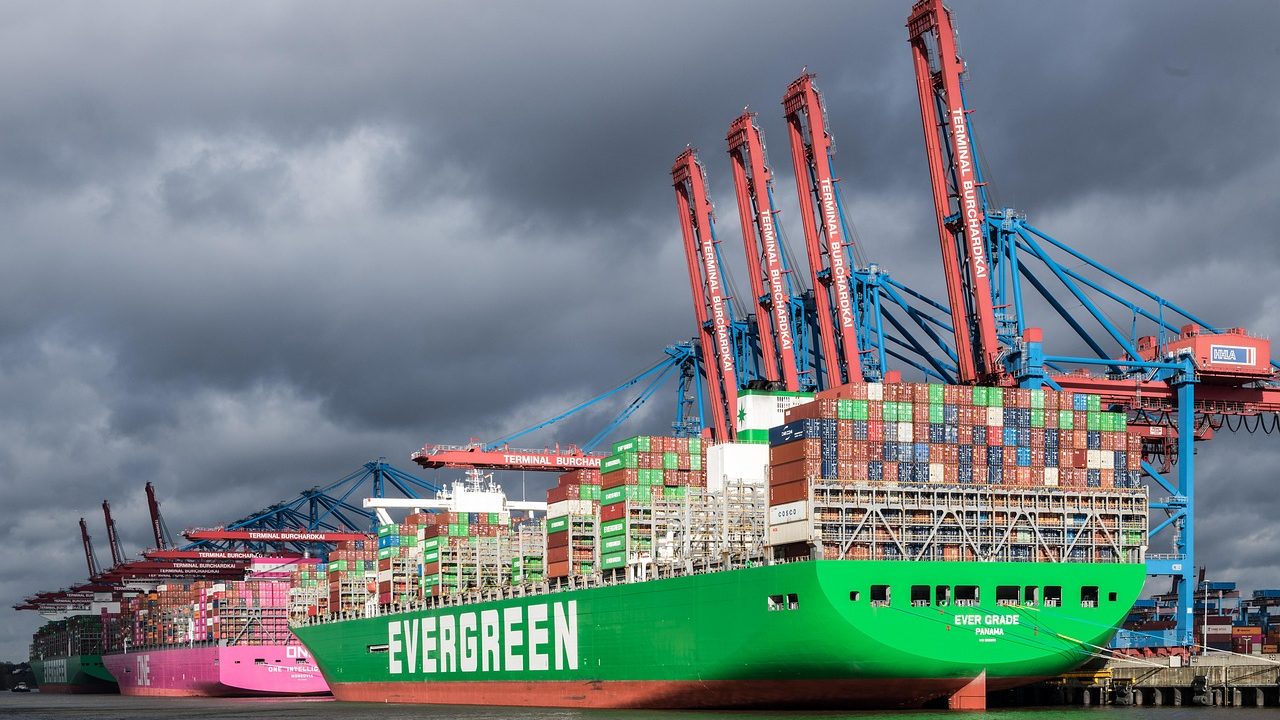
7. Evergreen Marine Corporation
- Headquarters: Taoyuan, Taiwan
- Fleet Size: Over 200 vessels
- TEU Capacity: Around 1.5 million
Evergreen is a prominent player in the transpacific and Asia-Europe trade. The company is known for its fleet of ultra-large container ships.
8. HMM (Hyundai Merchant Marine)
- Headquarters: Seoul, South Korea
- Fleet Size: About 75 vessels
- TEU Capacity: Over 820,000
HMM is South Korea’s national carrier and continues to modernize its fleet to compete on major global routes.
9. Yang Ming Marine Transport
- Headquarters: Keelung, Taiwan
- Fleet Size: More than 90 vessels
- TEU Capacity: Around 700,000
Yang Ming is a growing container shipping line with strong ties to Asian markets and expanding coverage in North America and Europe.
10. ZIM Integrated Shipping Services
- Headquarters: Haifa, Israel
- Fleet Size: Around 90 vessels
- TEU Capacity: Over 500,000
ZIM specializes in agile, customer-focused logistics and digital shipping services, making it one of the most tech-savvy companies in the industry.
Why Are These Shipping Lines Important?
These top ten shipping lines are responsible for transporting the majority of containerized cargo across the globe. Their vast fleets, global port networks, and strategic alliances help reduce transit times, improve supply chain efficiency, and drive international trade.
They also invest heavily in green technologies, digital logistics, and smart shipping practices, shaping the future of maritime transport.

Final Thoughts
To summarize:
- There are more than 100 shipping lines in the world, but a small group dominates international container shipping.
- The top ten shipping lines account for the majority of global shipping capacity.
- These companies play a critical role in the global economy, managing thousands of vessels, serving hundreds of ports, and enabling the smooth flow of goods worldwide.
Understanding the structure and dominance of these leading shipping lines is essential for businesses, logistics professionals, and anyone interested in global trade.
