

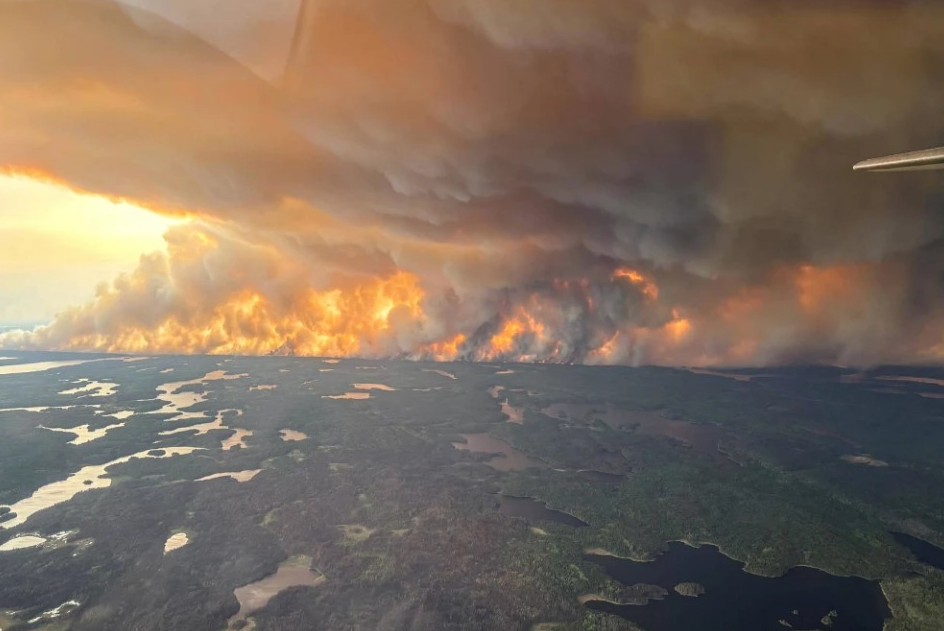
Smoke from Canadian wildfires is significantly impacting air quality across the Midwest and Great Plains. The widespread Canadian wildfire smoke air quality issues have prompted several states to issue alerts, urging residents to take precautions as smoky conditions persist and health risks increase.
Massive Canadian Wildfires Burning Out of Control
More than 90 wildfires currently rage across Canada, according to the Canadian Interagency Forest Fire Centre (CIFFC). The province of Manitoba faces intense fires, forcing approximately 17,000 residents to evacuate. These wildfires highlight the growing threat of climate change and extreme weather patterns fueling larger, more frequent fires.
Smoke Travels Across Borders
High-altitude winds carried the smoke into the Upper Midwest on Friday, with plumes reaching as far south as the Georgia-Florida border over the weekend. The widespread impact demonstrates how wildfire smoke can travel hundreds or even thousands of miles, affecting areas far removed from the flames.
Health Alerts and Precautions
Several states have issued air quality alerts to protect residents, especially those in sensitive groups such as older adults, pregnant individuals, newborns, and people with respiratory or heart conditions. Exposure to smoky conditions can lead to health effects, including itchy eyes, coughing, runny noses, and shortness of breath. In severe cases, it can exacerbate conditions like asthma and heart disease.
Minnesota’s Statewide Alert
Minnesota has implemented an air quality alert across the entire state, effective until Monday evening. Northern counties are expected to experience air quality deemed unhealthy on the Environmental Protection Agency’s (EPA) Air Quality Index (AQI). Under these conditions, even individuals outside sensitive groups may encounter adverse effects. Residents are advised to limit outdoor activities and take protective measures.
Wisconsin’s Evolving Situation
While Wisconsin’s initial air quality advisory expired on Saturday, state officials are monitoring conditions closely. The Department of Natural Resources warned of heavy smoke in northwestern counties on Sunday evening, with potential migration across the state by Monday. Parts of Wisconsin may see air quality levels that are unhealthy for sensitive groups, while areas in the northwest could experience even worse conditions.
North Dakota Faces “Very Unhealthy” Air Quality
North Dakota has reported air quality reaching the AQI’s “very unhealthy” threshold. This level poses heightened health risks for everyone, prompting state officials to recommend limiting outdoor exposure. Residents, especially those with pre-existing respiratory issues, are urged to stay indoors, close windows, run air filters, and consider wearing N95 masks when outdoors.
South Dakota’s Extended Alert
South Dakota has also issued an air quality alert for specific areas, lasting through Sunday or until conditions improve. Residents are advised to monitor local air quality levels and take precautions as needed.
Visual and Atmospheric Effects
People in affected areas may notice a distinctive campfire smell, hazy skies, and vibrant sunrises and sunsets. These phenomena result from the fine particulate matter (PM2.5) present in wildfire smoke, which can penetrate deep into the lungs and cause significant health concerns.
Long-Distance Health Risks
Even regions far from active wildfires can experience health impacts from transported smoke. In 2023, Canadian wildfire smoke created hazardous air quality in major U.S. cities, including New York, Boston, Philadelphia, and Washington, D.C. A study from the same year revealed that residents in New York and New Jersey were exposed to exceptionally high concentrations of PM2.5. Short-term exposure to these particles can trigger cardiac arrest, asthma attacks, or strokes, while long-term exposure increases risks of chronic conditions like heart disease, lung cancer, and kidney disease.
Link to Climate Change
The frequency and intensity of wildfires have surged in recent years, fueled by climate change. Rising temperatures, prolonged droughts, and other extreme weather events, such as hurricanes and heatwaves, create ideal conditions for wildfires to ignite and spread.
Extreme Weather Compounds Challenges
As the Midwest grappled with smoky conditions, severe storms struck parts of the South and East Coast, while millions in the West faced heat alerts with temperatures exceeding 100 degrees Fahrenheit. The confluence of these events highlights the interconnected impacts of climate change on public health and safety.

Protecting Against Wildfire Smoke
Authorities recommend several measures to minimize exposure to wildfire smoke:
- Stay Indoors: Keep windows and doors closed to prevent smoke from entering your home.
- Use Air Filters: Run indoor air filters or purifiers to improve air quality inside.
- Wear Masks: Consider wearing N95 masks outdoors to reduce inhalation of fine particulate matter.
- Limit Outdoor Activities: Avoid strenuous activities and prolonged time outside, especially if you belong to a sensitive group.
Conclusion
The ongoing Canadian wildfires serve as a stark reminder of the far-reaching impacts of climate change. As smoke continues to drift across borders, communities must remain vigilant and proactive in protecting public health. Addressing the root causes of climate change and enhancing wildfire prevention efforts are critical to mitigating these challenges in the future.
