

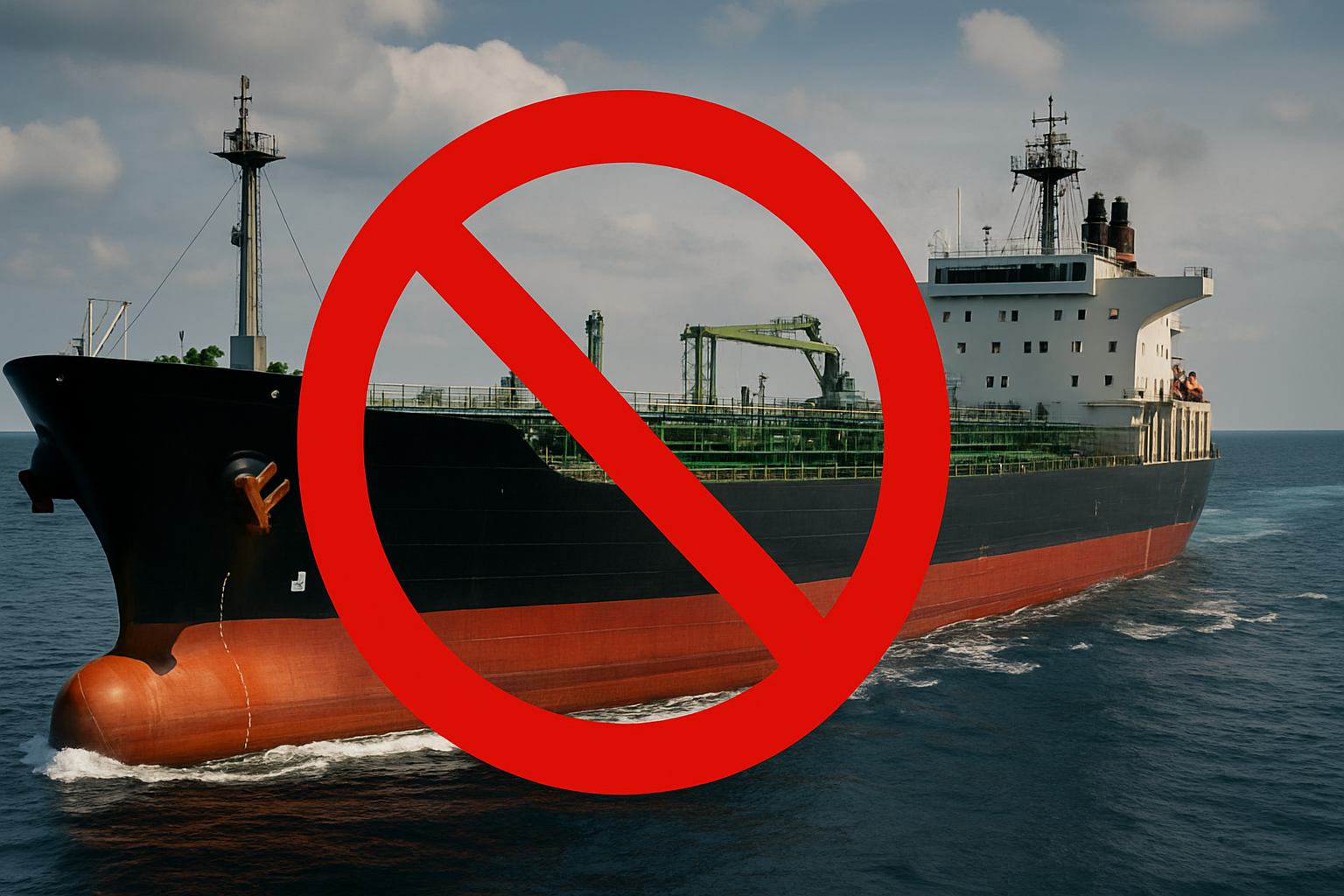
The US has sanctioned six companies and a number of vessels in new Iran oil trade sanctions. These sanctions are aimed at the sale and transportation of Iranian petroleum and petrochemical products. One of the blacklisted companies is an Indian company and the other is a Pakistani company. Washington is still piling pressure on Tehran by cutting its financial channels.
The announcement was led by the US State Department and the Treasury Office of Foreign Assets Control (OFAC). These agencies are trying to close down networks that help in the movement of oil in Iran in secrecy. The new move is in line with the maximum pressure policy towards Tehran. This policy limits Iran to access international financial and energy markets.

US Sanctions on Oil Transportation Systems
The new sanctions target a network of shipping and management firms that smuggle Iranian oil. These companies are directly involved in assisting Iran to transport petrochemical products around the world. The US claims that they are breaking the current sanctions and allowing Iran to finance regional threats.
SAI Saburi Consulting Services, located in New Delhi, is one of the major targets. This company operated two LPG tankers: BATELEUR and NEEL. In September 2022, BATELEUR carried Iranian petroleum products. The cargo was in the name of Alliance Energy Co., which was already under US sanctions.
The US also sanctioned Alliance Energy Pvt Ltd, a company based in Lahore, Pakistan. The firm had already been blacklisted and now faces additional sanctions for continuing its involvement in the Iranian oil trade.
Sanctions on Foreign Firms and Vessels
The move by the Treasury does not end in South Asia. The new list also contains companies in the UAE, Iran, and Panama. These firms have ships that transport Iranian oil off the radar.
The NEEL and BATELEUR tankers transported prohibited petroleum products. These deliveries assisted Iran to evade sanctions and generate essential income. Consequently, the US included these vessels in its list of blocked property. Secondary sanctions can now be imposed on any business or bank that does business with them.
Washington Reinforces “Maximum Pressure”
These new sanctions come weeks after US and Israeli strikes hit Iran’s nuclear facilities. The timing shows a clear strategy. Washington wants to limit Tehran’s financial power and nuclear capabilities.
US Treasury Secretary Scott Bessent stated:
“The Treasury will also focus on the sources of revenue of Tehran and increase economic pressure to interfere with the access of the regime to the financial resources that support its destabilising activities.”
The US wants to cut off the financial inflow of Iran by exporting energy. The sanctions on firms in India and Pakistan show that the US is leading a global effort to enforce its restrictions. OFAC also cautions that any organization that supports the listed companies or vessels will be answerable.
Local Companies Encounter Compliance Issues
Such sanctions pose grave threats to shipping and oil logistics companies. Iran, India, Pakistan, the UAE, and Panama are now under increased scrutiny of businesses. They have to inspect contracts, trade partners, and vessel registries to prevent penalties.
Companies such as SAI Saburi Consulting Services and Alliance Energy Pvt Ltd were intermediaries. Their participation demonstrates how international trade may subject businesses to legal liabilities. Regulators have flagged ships such as the BATELEUR and NEEL, increasing pressure on maritime trade.
Businesses need to enhance compliance checks to prevent their inclusion in sanction breaches.
Conclusion
The recent Iran oil trade sanctions show the firm stand of the US government. It is still cracking down on firms that assist Tehran to evade oil sanctions. The involvement of Indian and Pakistani companies is a daring step, which is a stern message to others in the region.
The US government aims to block Iran from funding actions that threaten peace in the region. The US is getting a stranglehold with economic and military instruments at its disposal. Companies that have operations in Asia and the Middle East need to be cautious to avoid these broadening bans.
