

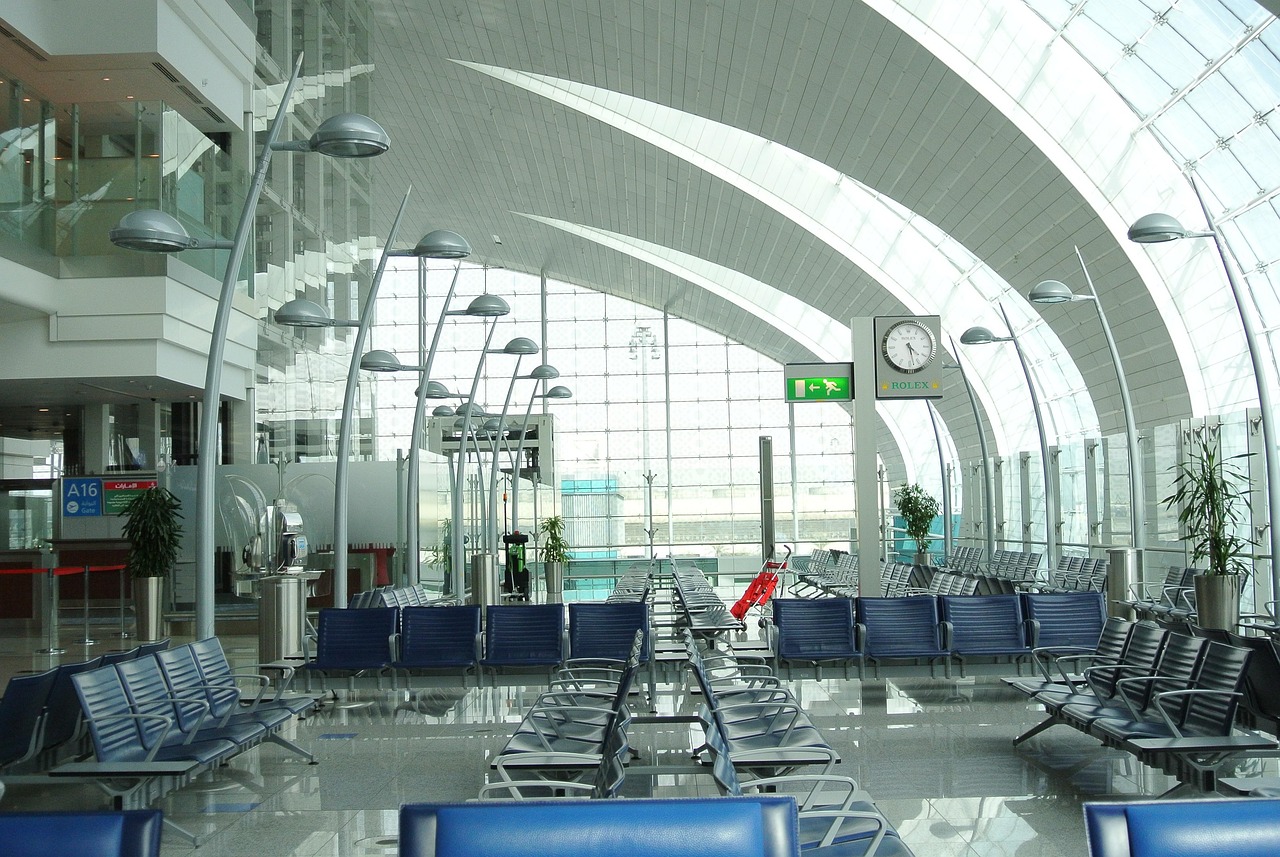
Dubai International Airport retains title as the world’s busiest global hub for international travellers, reaffirming its dominance in global aviation. In 2024, the airport received an incredible 92.33 million international passengers, which was a 6.1 percent increase over the prior year. This expansion solidifies DXB as a global leader in air travel, and the numbers are verified by the Airports Council International (ACI) in its most recent annual aviation report.
The report issued by the ACI points out the trends in the world in terms of passenger traffic, air cargo, and aircraft movements. DXB has surpassed other large international airports, again taking the first place in the international passenger segment.
Aviation Resilience in Global Rankings
London Heathrow came in second with 79.19 million international travellers. Incheon Airport of South Korea came next with 70.67 million, followed by Changi Airport of Singapore with 67.06 million and Schiphol Airport of Amsterdam with 66.82 million.

These rankings indicate the magnitude of the global aviation industry and the strength of the industry that has been expanding, despite the complicated global environment, said Justin Erbacci, ACI World Director General.
The international air travel experienced a phenomenal recovery and growth in 2024. The world passenger traffic exceeded 9.4 billion with an 8.4 percent growth over 2023. This figure was also higher than the pre-pandemic 2019 figure by 2.7%. The 20 busiest airports served 1.54 billion passengers collectively- representing 16 percent of the global traffic.
DXB Increases in Passenger and Cargo Traffic
Although Dubai International Airport still holds the title of international traffic, the Hartsfield-Jackson Airport in Atlanta was the busiest in total traffic of both domestic and international traffic. In 2024, it served more than 108 million passengers. Dubai was ranked second, Dallas Fort Worth, Tokyo Haneda, and London Heathrow.
DXB performed well in the cargo industry. The airport rose to 11 th position in the world air freight ranking. This is a reflection of a worldwide trend, with cargo transport increasing by 9.9 percent year-on-year in 2024. E-commerce demand increased dramatically in 2024. Fuel costs stayed low throughout the year. Maritime transport problems also drove enterprises to use air freight. These causes resulted in a dramatic increase in worldwide cargo traffic. Airports transported over 127 million metric tonnes of cargo around the world. Dubai International Airport increased its performance, moving up from 17th to 11th place in the global air freight rankings. This increase shows DXB’s growing presence in international cargo logistics.

There was also an increase in aircraft movements where the world operations exceeded 100 million. This number approaches pre-COVID numbers, which highlights the complete restoration of international aviation.
The fact that Dubai International Airport remains the leader in terms of passenger and cargo traffic proves its importance in the world aviation industry and its gradual rise.
Aircraft Movements Approach Pre-Pandemic Levels
There was also a healthy rebound in aircraft movements. The yearly global operations were over 100 million, which is approaching the pre-pandemic levels. This is a powerful move towards the aviation sector, which means that people have regained their confidence in traveling and that the world is becoming more connected.
The fact that Dubai International Airport remains the leader in terms of passenger and cargo traffic proves its significant role in the world aviation and its stable growth.
