

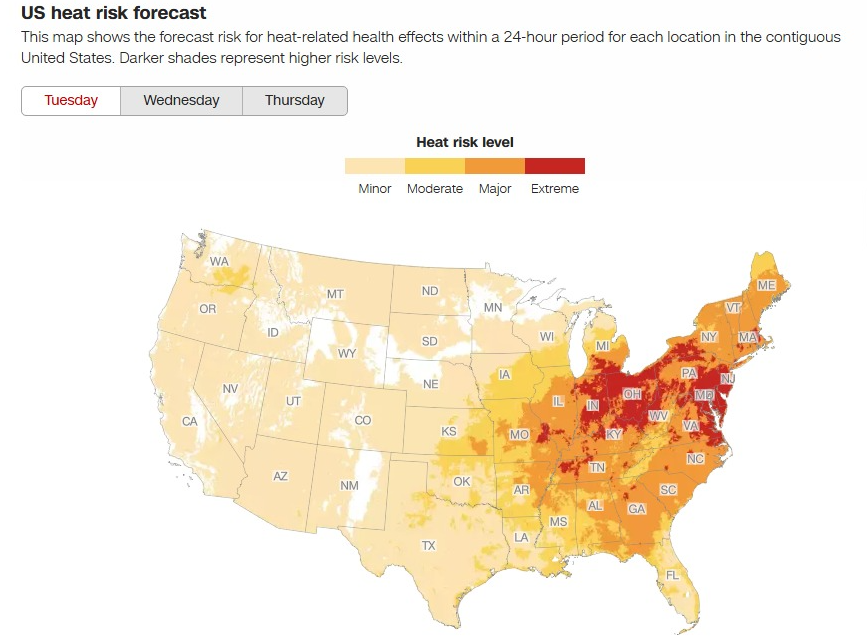
A relentless heat wave peaked on Tuesday, bringing the hottest day in a decade to many East Coast cities. The extreme conditions, driven by a powerful heat dome, intensified over the weekend in the central United States. By Tuesday, temperatures rivaled the hottest summer days, endangering millions and worsening hazardous conditions.
Deadly Impact of the Heat Wave
The heat wave has caused loss of life and widespread disruptions. In St. Louis, Missouri, a 55-year-old woman died after spending at least three days without water or air conditioning. St. Ann Police Chief Aaron Jimenez reported she was found in her home on Monday as heat indices exceeded 100 degrees.
Heat-Related Emergencies Across the Region
The oppressive heat overwhelmed first responders and residents alike:
- Massachusetts Firefighters Hospitalized: Two firefighters were treated for heat exhaustion while battling a house fire in Norfolk on Tuesday morning. Cooling measures, including a rehabilitation truck, were deployed to assist.
- High School Graduations in New Jersey: Sixteen people were hospitalized, and over 150 were evaluated for heat-related illnesses during two high school graduations in Paterson on Monday, said Fire Chief Alejandro Alicea.
- Concert Heat Illnesses in Washington, DC: Six individuals were hospitalized before and after a Nationals Park concert on Monday. Extreme temperatures prompted the closure of the Washington Monument on Monday and Tuesday.
- Hikers Rescued in New Hampshire: Two teenage hikers on Gap Mountain lost consciousness Monday evening due to intense heat and humidity. Jaffrey recorded 96 degrees, tying its June record high.
Infrastructure Struggles Under Heat
The heat wave disrupted transportation and infrastructure:
- Train Services Affected: An Amtrak train stalled in a Baltimore tunnel Monday, trapping passengers in unbearable heat for over an hour. Travel issues continued Tuesday, with train cancellations in North Carolina and speed restrictions on Northeastern routes.
- Road Damage in Wisconsin and Missouri: Intense heat caused road buckling in Milwaukee and Green Bay suburbs, with over 50 incidents reported in Wisconsin. Cape Girardeau, Missouri, also warned of further potential damage.
- Bridge Operations in Massachusetts: The New Bedford-Fairhaven swing bridge was closed for hours Tuesday due to heat-related impacts, according to the Massachusetts Department of Transportation.
Record-Breaking Temperatures
The extreme heat shattered records across the East Coast:
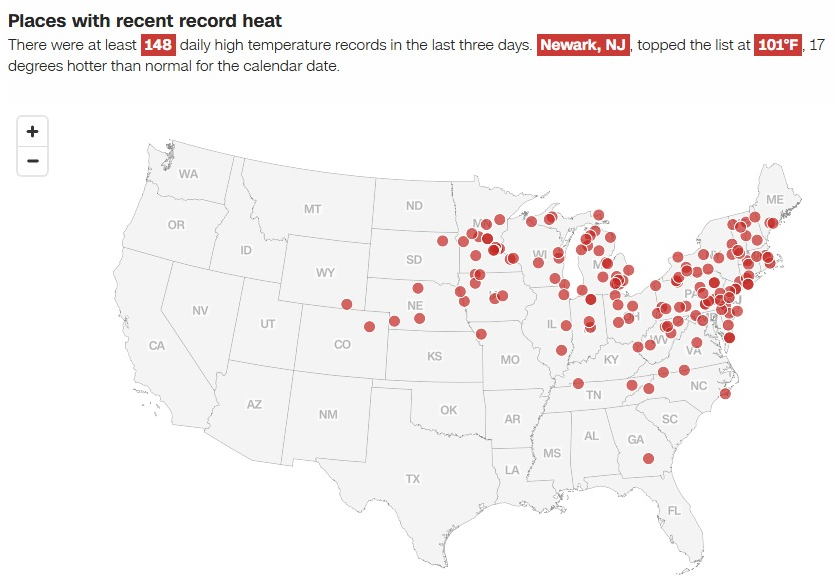
- Philadelphia: Reached 101 degrees on Tuesday, marking its first 100-degree day since 2012 and the earliest such occurrence in summer.
- Providence, Rhode Island: Hit 100 degrees, setting a new June high-temperature record.
- Newark, New Jersey: Reached 103 degrees, tying the June high-temperature record.
- New York City: Central Park neared 100 degrees, the first since July 2012. JFK Airport recorded 102 degrees, the highest ever in June, while LaGuardia tied its June record at 101 degrees.
- Washington, DC: Registered 99 degrees, narrowly missing its first triple-digit day of the year. Rail temperatures reached 135 degrees, forcing Metro operators to reduce train speeds.
Heat’s Toll on Public Utilities
Energy providers are struggling as the heat strains power grids. Con Edison, New York City’s primary energy supplier, urged residents to conserve electricity. They recommended setting air conditioning units to 76 degrees and limiting appliance use.
Climate Change and Heat Waves
Extreme heat is the deadliest weather phenomenon in the United States. Climate change is increasing the frequency and intensity of heat waves, with nighttime temperatures warming faster than daytime highs. Globally, heat waves are becoming longer and more severe, exacerbating risks to public health and infrastructure.
What’s Next for the Region?
While the heat wave is easing, relief will be gradual:
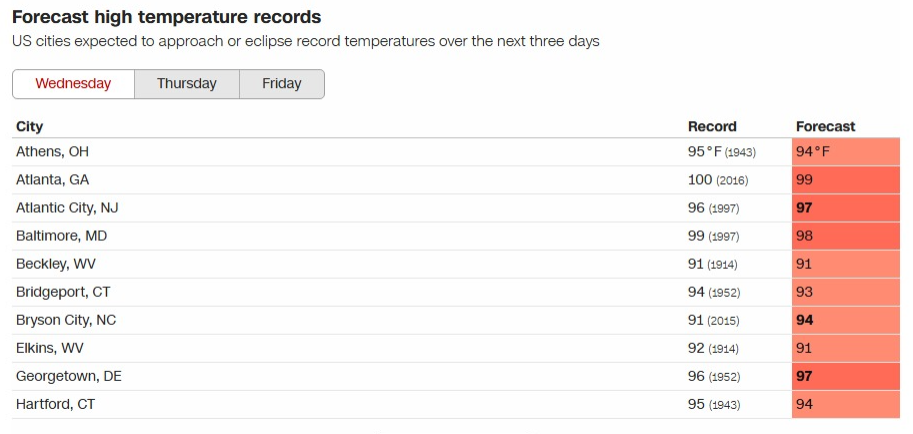
- Wednesday: Temperatures will stay high but be less extreme. Record-breaking heat may persist in parts of the mid-Atlantic.
- Thursday: Conditions will improve further, with highs returning to typical late-June levels. Morning warmth will delay full relief.
- Friday and Beyond: Cooler overnight temperatures will return. The Northeast will enjoy highs in the 70s and 80s. However, forecasters warn this week’s heat wave could be a preview of a hotter-than-average summer across the Lower 48 states.
Tips for Staying Safe in Extreme Heat
Authorities urge residents to take precautions during extreme heat. Use air conditioning, stay hydrated, avoid strenuous outdoor activities, and check on vulnerable neighbors, including seniors and those with medical conditions. Cooling centers in many cities offer respite for those without access to air conditioning.
